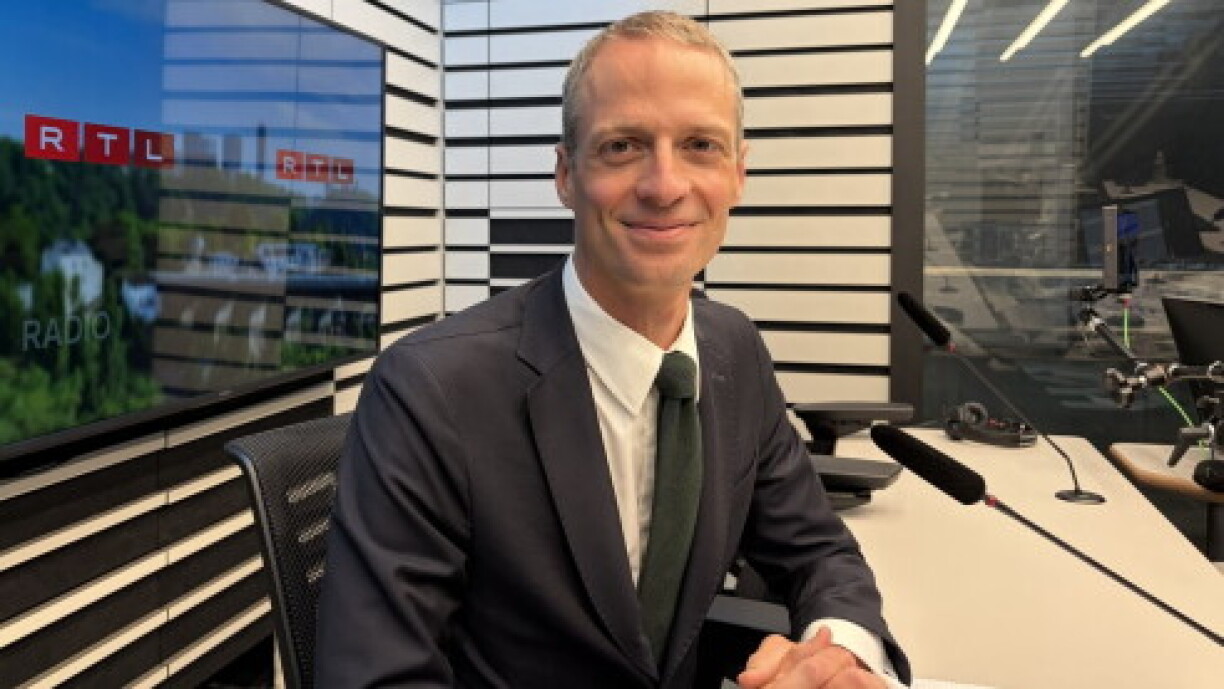
Record-breaking summer temperatures are likely to become increasingly common, and Luxembourg must be ready to deal with this new reality, Environment Minister Serge Wilmes said in an interview with RTL on Monday.
Wilmes explained that Luxembourg is already well-prepared, with the government implementing a robust climate policy and a range of 152 measures designed to address both mitigation and adaptation. These measures include greening urban spaces and energy-efficient renovation of buildings.
According to the minister, municipalities are being supported by the state, and citizens can also benefit from incentives such as the Klima-Bonus scheme.
However, Wilmes emphasised that it is not only about protecting people from heat but also about tackling the root cause by reducing emissions.
He said the government was practising climate politics, with plans to equip schools and other buildings in order to protect them from the heat, using air conditioning as a transitional technology.
The government has improved the subsidy system and extended it until 2030, with regard to photovoltaic systems, energy renovation, and heat pumps. Pre-financing for heat pumps, energy renovation, and electromobility should also come in the autumn, Wilmes added.
"We're hoping to make much faster progress with the energy transition", he said. CO2 emissions were down 3.5% in 2025, compared to the previous year, but the minister said it must be quicker and simpler.
The minister stressed the importance of involving the public in climate policy. For climate action to be effective and improve people’s everyday lives, Wilmes argued that it must become faster, simpler, and more affordable. It should not get on people's nerves, as Prime Minister Luc Frieden said previously.
The delay for a refund for a solar panel system has already been reduced from 13 months to 3 months, and Wilmes expressed the desire to reduce this wait to a month in future.
In response to criticism, including from CSV party colleague and chairman of the parliamentary environment committee Paul Galles, that the government's climate policy should be more consistent, Wilmes said he would be happy if everyone jumped on board.
However, it was noticeable that voices emerged in the summer that were previously silent – "free riders" who say that now the government needs to be more consistent. He argued that the government has ambitious goals.
"We are not thinking about a subsidy for air conditioning at the moment", Wilmes replied when asked. "But we should not be afraid of that. We should know how to adapt, and that includes politics."





