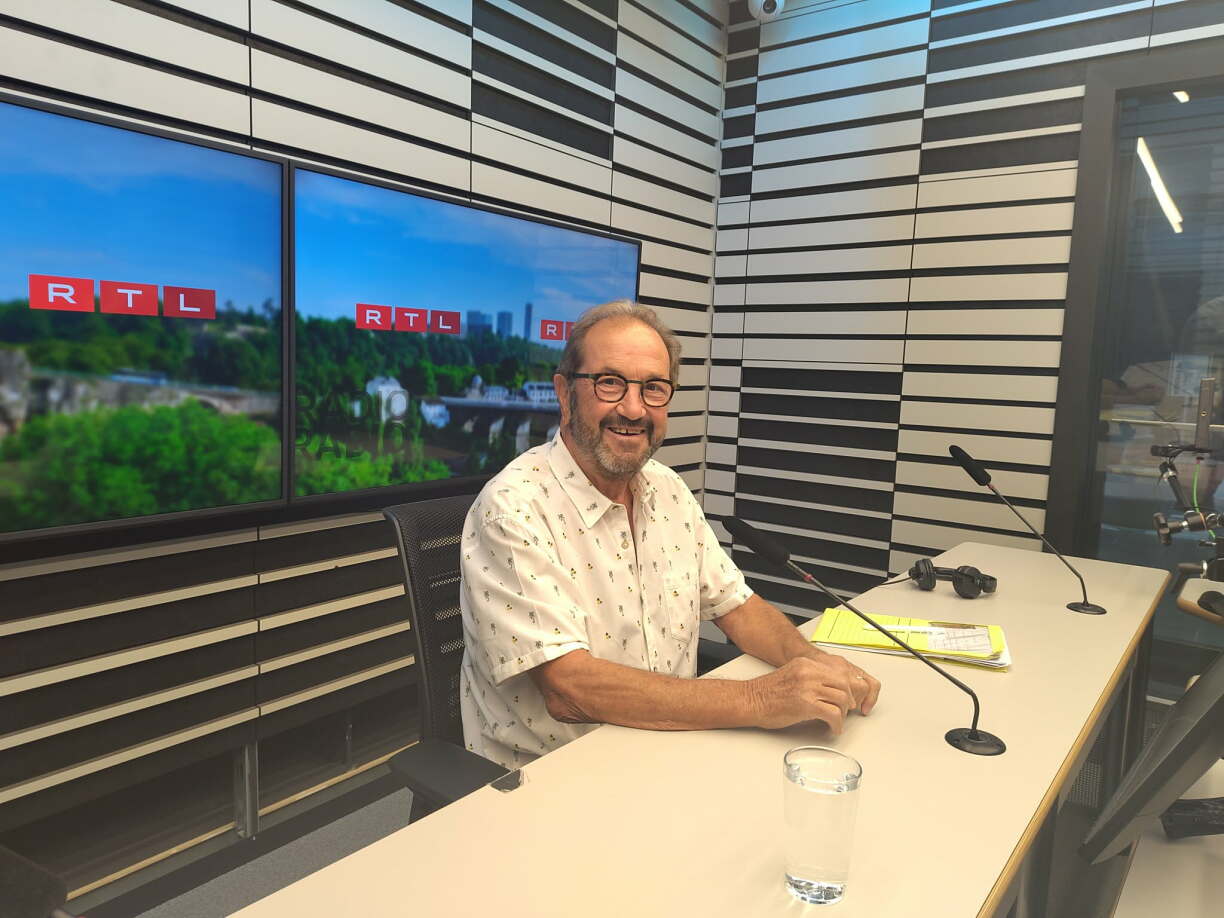
Having spent 31 years in parliament, Gibéryen carries strong opinions about the current political landscape, keeping a critical eye at current affairs with some praise to spare. He offered a generally positive assessment of the first three years of the CSV-DP coalition's work.
In an interview with RTL on Monday morning, he acknowledged that there had been change in parliament, describing a generally different policy approach – one he deems decent. He noted that the ADR often votes with the coalition on legislation rather than taking an oppositional stance for its own sake.
He described several recent reforms, including the tripartite, pension, and constitutional reforms, and acknowledged that "a lot of good things" were included in the current government's tax reform plans. Still, he expressed concern that, in many areas, the new government is simply continuing the previous administration’s policies.
Gibéryen was particularly critical of the constitutional reform, referencing the inclusion of abortion rights in the constitution, alleging that "no party is questioning the current legal provisions, so there was no need for it."
He argued that the CSV – where the C stands for Christian – facilitated this change by providing the left parties with the required majority, and said it "should at least have the decency to remove the C from its name". He stressed that by granting the left parties that qualified majority, the CSV has made it so those provisions can no longer be removed from the constitution even if a future majority wanted to.
Pension reform needs to go further, says Gibéryen
Gibéryen welcomed the government's pension reform initiative, though he believes it did not go far enough.
The ADR had proposed a degressive adjustment: those with the smallest pensions would receive the full indexation, which would then taper off up to a pension of €9,000. Anyone receiving more than €9,000 would not benefit from the adjustment. He argued that the government "lacked the courage" to make the full necessary changes, especially regarding a national solidarity effort involving the state, employers, insured workers, and pensioners.
He argued that given the current active population, it can be estimated that in 40 years, 1.5 million active contributors would be needed, while today Luxembourg does not even count 600,000. Hence, he called for action before more drastic measures become necessary, contending that "the earlier we react, the less dramatic it will be. The longer we wait, the tougher the measures will have to be".
Gibéryen also reflected on the recent tripartite negotiations, highlighting how the government handled social dialogue and financial support. He acknowledged positive measures, such as a higher minimum wage. In his view, tripartites were easier in the past because "the state had money". Now, he argued, the situation is different: "The state no longer has money. The budget doesn't balance, and in the coming years it probably won't either." Gibéryen warned that future measures would have to be financed by borrowing, making tripartite agreements much harder to reach.
He also lamented that, despite improvements such as the minimum wage increase funded by the state, pensioners did not receive an equivalent boost to the minimum pension, pointing to the need for fairness across social groups.
ADR’s position, internal dynamics, and foreign policy stances
When asked about the ADR's ideological stance, Gibéryen denied claims that the party has shifted further to the right. He insisted that the ADR remains the only party to the right of centre in Luxembourg, with a strong focus on sovereignty, tradition, and language. He added that the CSV no longer stands on the right, tracing this back to the constitutional reform as well as the tax reform. He claims that "if you are the only party that is still right-wing, then for every leftist you are already extremely right-wing".
He distanced himself from the position of former honorary president Robert Mehlen, who left the party over disagreements regarding Kartheiser's trips to Russia. Despite these differences, Gibéryen insisted this has not damaged his friendship with Mehlen. While Gibéryen acknowledged that Russian President Vladimir Putin is a dictator and that the war against Ukraine is to be condemned, he argued that dialogue with the Kremlin remains essential. Echoing Kartheiser's stance, he contends that "there will be no end to the war without talking to Moscow".