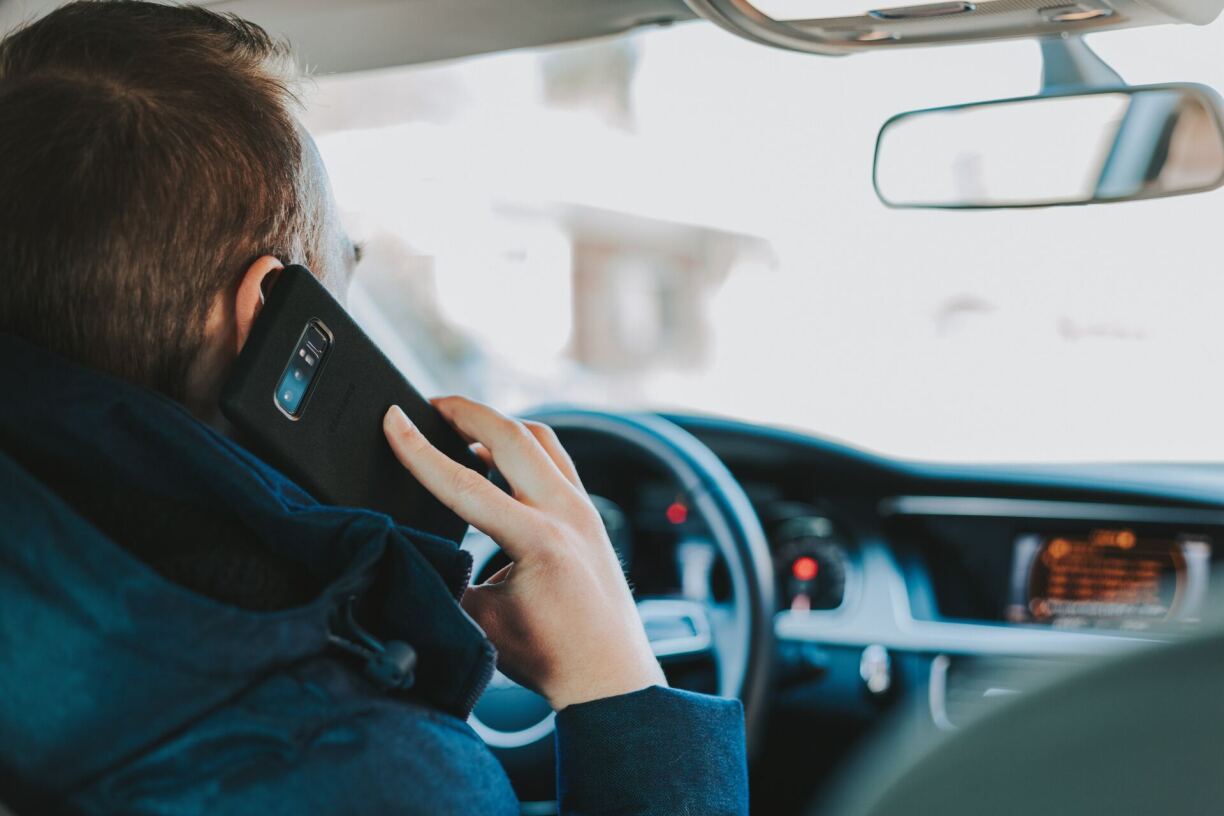
It's a well-known sight in our day and age, and a sinful behaviour most of us are occasionally guilty of: stumbling along like a zombie while consumed by the screen of a mobile device. While this is dangerous enough for pedestrians in the street, it becomes deadly when it's done behind the wheel.
In the year 2018, 3,519 drivers were fined by the police in Luxembourg for using their phones while driving. How does this problem impact safety on the country's roads?
Drivers' inattention while being behind the wheel is the second leading cause for fatal traffic accidents. Number one remains speeding, while driving under the influence comes in third.
The "Sécurité routière" has been lamenting the lack of rigorous persecution of these infringements for years, as well as the lack of preventive measures.
Not all hope is lost however. The association recognises that police have done more in recent years to fight the problem and has welcomed the initiatives proposed in the "Road safety 2019-2023" action plan launched by the ministry of transportation. Among those is banning the use of earphones while driving, which tends to be distracting to drivers.
A further change will be a 4-point-penalty for phone use behind the wheel, double the former penalty, which is set to be introduced in 2021.
The irony of the situation? Most drivers at fault are well aware of the danger. A recent study has shown that around 95% of participating drivers acknowledged the threat of being distracted by a mobile device. Nevertheless, the problem persists and also affects professional drivers...
Our colleagues from RTL 5minutes contacted Paul Hammelmann, president of the road safety organisation, to talk about the issue. "Phones can become an addiction, like any drug can. I myself know the problem all too well, wanting to look at the screen and reply to messages instantly. But once we get behind the wheel, it is imperative that we refrain from doing so", he commented on the situation.
So, as long as cars still need a human operator, it is best advised to keep phones out of sight while being behind the wheel. The "Sécurité routière" has thus far noticed that fines are more effective in counteracting the problem than preventive policies, which they take as an indicator of the gravity of the problem.





