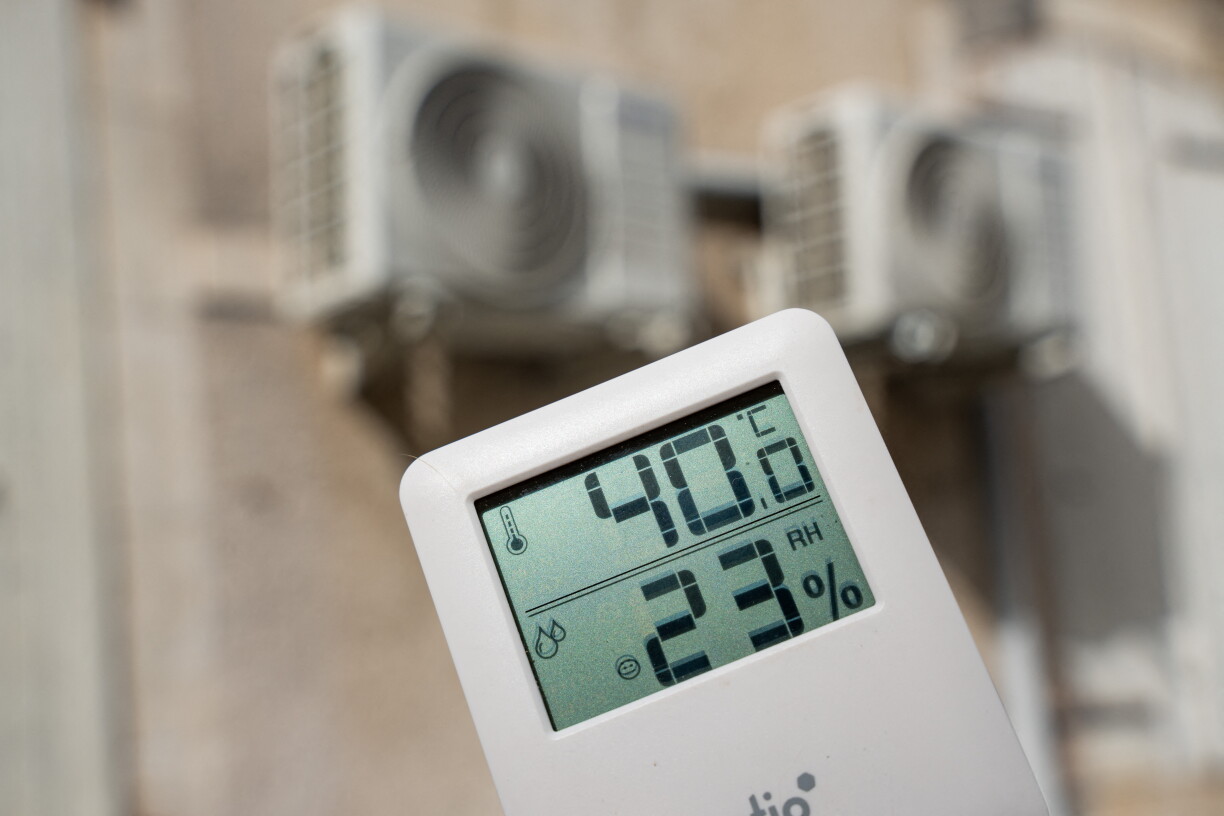
With an average temperature of 19.9 degrees, June 2026 was already the warmest June since records began in 1947. July has now doubled down on that trend.
MeteoLux's latest report further confirms the pattern, and one of the weather agency's meteorologist Luca Mathias sat down with RTL to discuss what this means.
With almost 361 hours of sunshine, last month was the second sunniest July ever recorded in Luxembourg. Only July 2022 saw more sunshine, with 377 hours.
A high-pressure area over Western and Central Europe was the main driver, according to Mathias.
The country was heavily influenced by high pressure in July, he explained, often reaching across from the Azores. Even when the air pressure dipped somewhat, stability at altitude meant that the air masses in place dried out and warmed up. As a result, so-called "heavy" air conditions tended to break up cloud cover and hold back rainfall rather than the other way round.
Not only was it sunnier, but it was also considerably warmer and drier. In July, the average temperature at Findel came in at 21.2 degrees, more than two degrees above the reference average. Rainfall, too, was down.
"Looking at cumulative rainfall since April, including July, only 150 litres per square metre have been recorded at Findel", Mathias said. The normal figure would be somewhere between 270 and 280 litres per square metre.
The current wildfires across Europe make the shift plainly visible. It is also striking that the five sunniest Julys have all been recorded since 2005.
Looking at MeteoLux's statistics for the past 20 to 30 years, Mathias noted, a definitive trend can be observed of summers becoming warmer, and not just summers but also the other seasons. That, he said, can already be put down to climate change, meaning the likelihood of summers such as the current one will keep climbing as the climate continues to shift.
Not every summer will be an exceptional one going forwards. But the trend is clear. The country will increasingly have to prepare for extreme events such as heatwaves and prolonged periods of drought.





