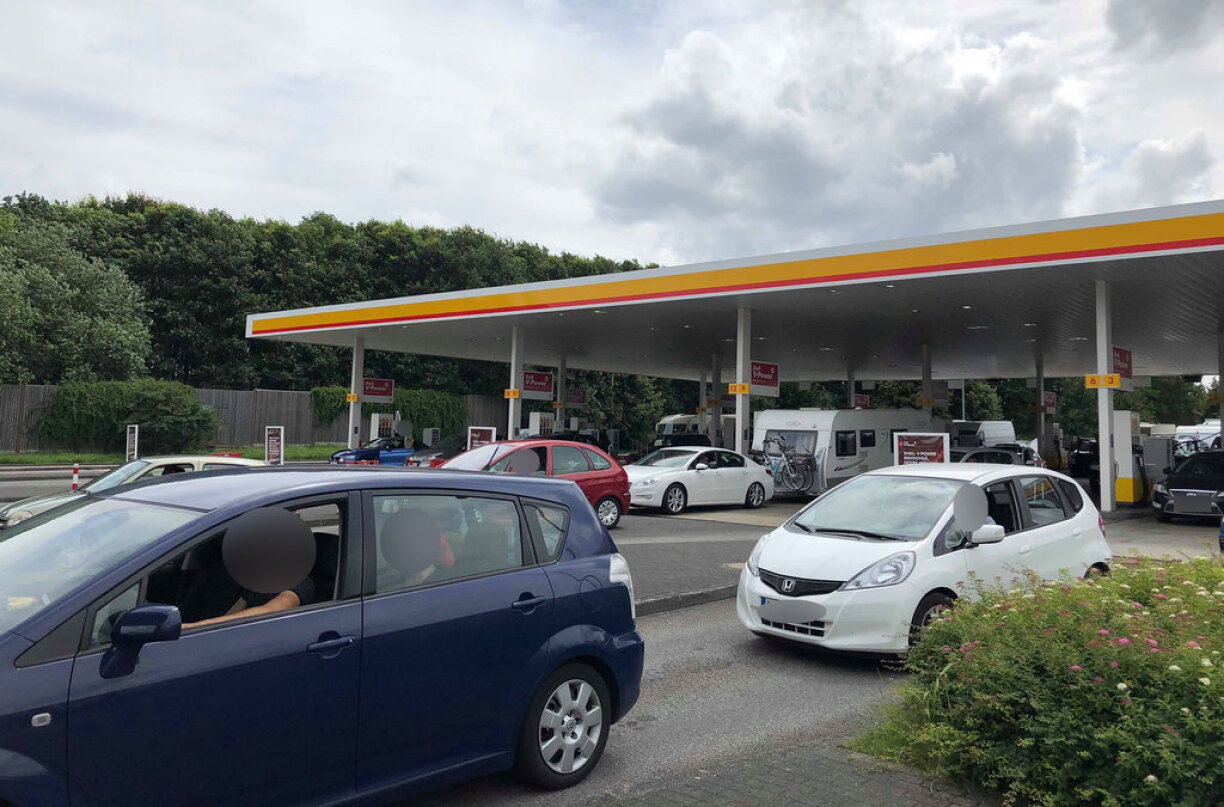
Next week on 1 May, the excises on fuels will increase, as announced in the coalition agreement last year.
Adapting taxes on fuel products should help the country reduce its CO2 emissions, but the question revolving around next week's change is whether this is a sufficient increase.
The Ecological Movement (Mouvement écologique - Mouveco) is adamant that the excise increase is by far not enough to counter the effects of fuel tourism. Minister of Finance Pierre Gramegna announced that the fuel tax would rise by two cents per litre for diesel and one cent for petrol.
However, according to Mouveco, to have an impact, a ten to fifteen cent increase on fuel tax would be required. Alternatively, Mouveco proposed a gradual increase of five to seven cents over the next few years.
When asked about the subject, the three ministers charged with the fuel tax (Minister for the Environment Carole Dieschbourg, Minister for Mobility and Public Works Francois Bausch, and Minister of Finance Pierre Gramegna) responded that the government would enact a "detailed monitoring of the evolution of road fuel sales." The ministers explained that this monitoring would allow them to determine consequent measures, which will endeavour to reduce the impact of fuel sales on the government's climate protection targets.
Whilst the fuel tax increase for 1 May is certainly a tangible measure, the response given by the ministers is less so. However, the ministers believe that they have already enacted a number of recommendations provided by Dr Dieter Ewringmann, an economist who focuses on environmental politics. The ministers cited the diesel taxation, the excise increase, and fiscal matters concerning service vehicles as measures already adopted by the government.
As for fuel tourism, the ministers admitted that the government had not yet reformed the differing excise duties for professional diesel as well as vehicle tax. However, the ministries have commissioned studies ahead of working on this reform.
Finally, faced with the question of whether installing road tolls to prevent fuel tourism, the ministers were clear in their rejection. The position taken by the government is that it is not envisioning introducing road tolls in light of the related feasibility difficulties and the practical issues related to introducing such a measure on a small territory.





