The obvious suggestion was that history courses should include the eventful life story of Grand Duke Jean, who helped liberated Luxembourg with the Allied forces. The Ministry of Education also recommended incorporating the Grand Duke's life into political education in schools.
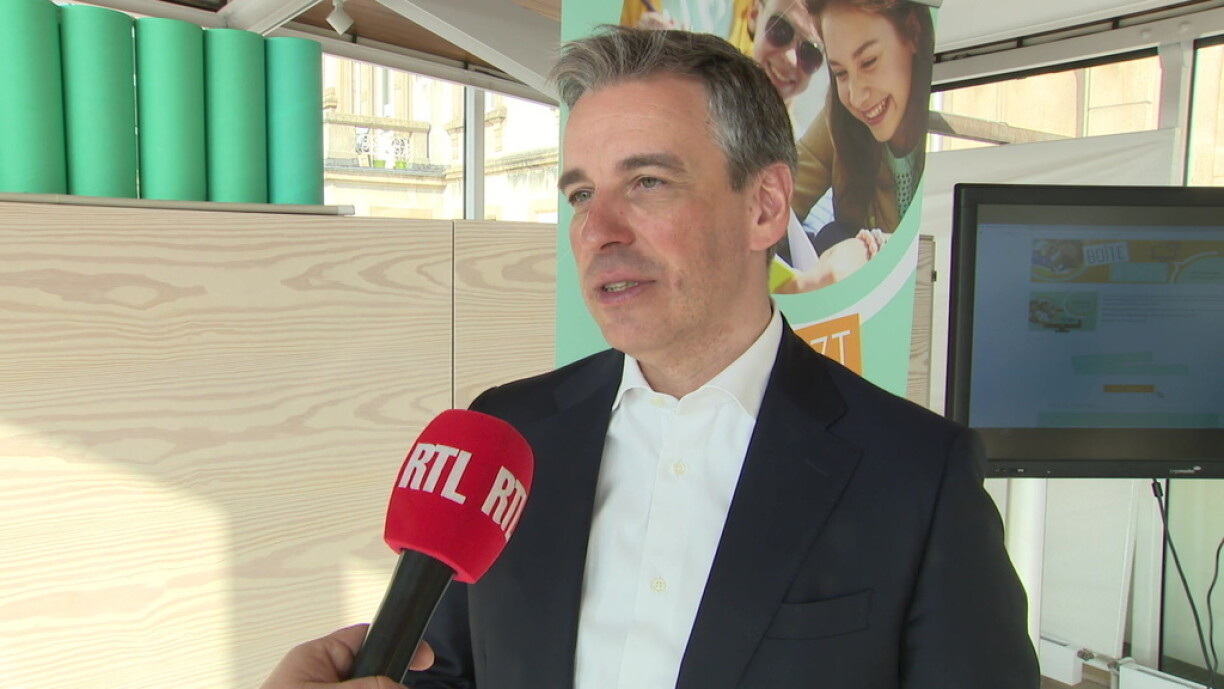
As the Minister of Education Claude Meisch explained, the Grand Duke, who died aged 98, is a "witness of time" of nearly 100 years of Luxembourg history. He represented the country and Meisch explained that young people's interest in the Grand Duke has risen over the last few days.
Having heard a lot about Grand Duke Jean with the news of his death, young people are now questioning what the statesman meant for Luxembourg and how he affected their lives, the minister explained. As a result, he announced that schools would now cover the life of the Grand Duke in schools.
Meisch described youth not strictly as an age, but also as an approach to life, and one represented by the Grand Duke. He described the current time as the opportunity to teach young people about Grand Duke Jean's active life, citing the existing interest as one of many reasons. Crucially, he stressed that it is important to transmit information of someone who lived through so many historical events to the next generation.
The history of the Grand Ducal family is already on the school curriculum, but it has not explicitly covered the life of the late Grand Duke. This is due to change in the future.
Meisch explained it was a natural process to cover former Grand Dukes in history courses, which of course includes Grand Duke Jean. But he also confirmed that the curriculum will be adapted, citing the week dedicated to Luxembourg's cultural heritage (in June) as an opportunity to cover the life and achievements of Grand Duke Jean. He said the ministry is encouraging schools to put an emphasis on the former head of state.
Meisch's call also involved more generally reinforcing education concerning Luxembourgish history and politics.
Mat dësem Appell soll och generell an de Schoulen d'Educatioun iwwert Lëtzebuerger Geschicht an och d'Politik renforcéiert ginn.
The Centre for Political Education (ZpB - Zentrum fir politesch Bildung) has the purpose of making politics more understandable for teenagers. The foundation may be financed by the Ministry of Education, but continues to emphasise its independence.
Meisch reiterated this point, highlighting the centre's purpose of providing an introduction to politics, which he believes should not be run by a ministry. As for what the centre chooses to highlight, he explained that the centre decides on its own themes.
In light of the upcoming European elections, the centre's current slogan is 'experiencing democracy': the centre is providing explanations for many European buzzwords that remain vague concepts.
The centre especially places a lot of value on experiencing politics, rather than theory courses, and the minister believes the centre's measures are incredibly important to reaching many young people. The centre uses many different media sources to connect younger people with politics: competitions, brochures, and websites like smartwielen.lu.
The ZpB's "democracity" project has also shows itself to be successful due to its participative nature. It allows students in various schools throughout the country to experience democratic decision processes in order to understand the complexity of politics. This will help prepare first-time voters for the elections.





