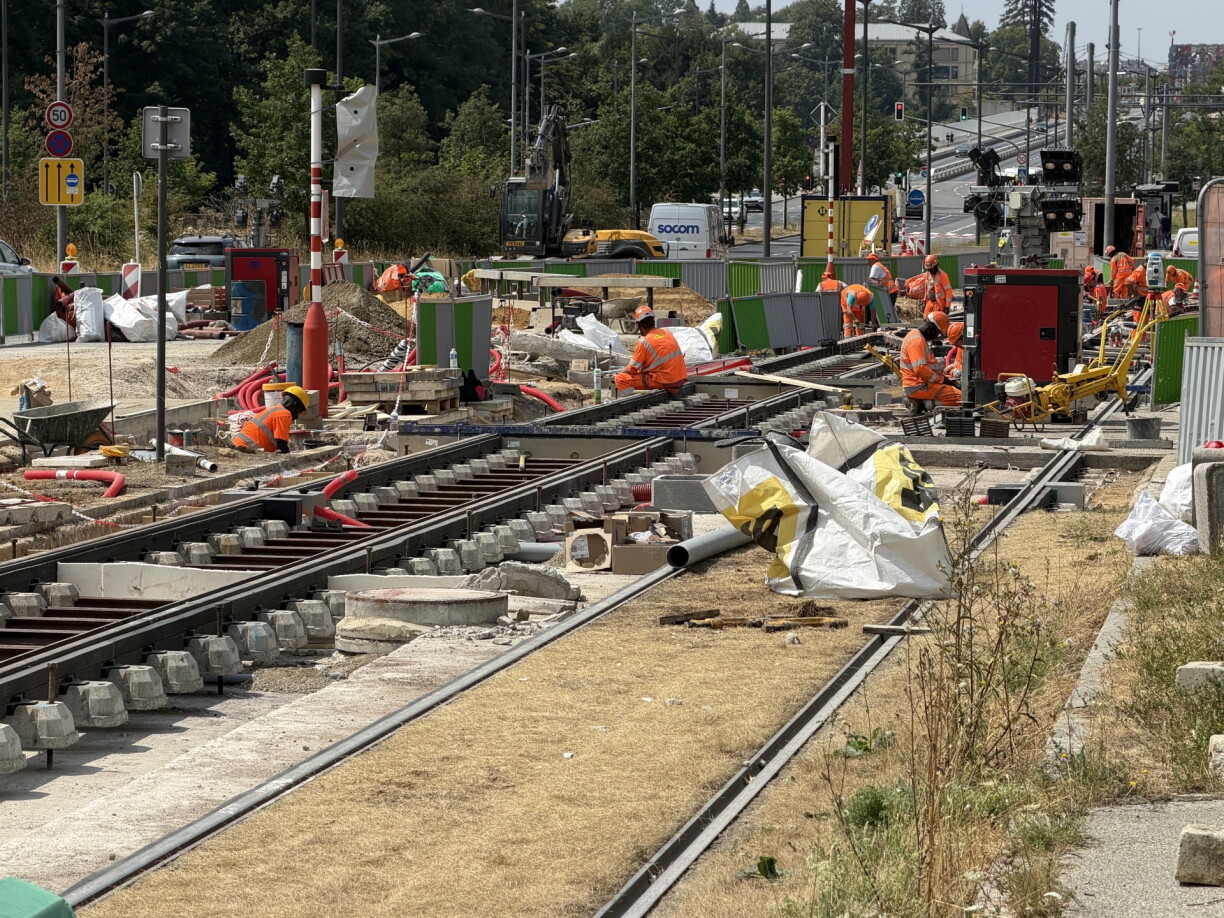
Luxembourg's construction industry entered its traditional collective summer leave period on Friday, bringing work on most building sites across the country to a halt until 23 August. The collective holiday, which has long been a fixture in the sector, ensures that workers are able to take time off during the summer peak rather than having to use their leave in winter.
According to Jean-Luc De Matteis, central secretary for the construction sector at the Independent Luxembourg Trade Union Confederation (OGBL), this arrangement provides much-needed clarity and security for employees planning their annual leave.
Paul Nathan, vice-president of the Chamber of Skilled Trades and Crafts and owner of a construction company, also supports the collective holiday, noting that it takes into account several important factors. After experiencing recent heatwaves, the collective holiday is still fully justified, according to him.
Workers already have thirty-one weeks of hard work behind them, "so being able to take three weeks off in a row is widely welcomed", Nathan further noted.


For employers, the collective break allows essential maintenance work on machinery to be carried out. Clients also benefit, as productivity is boosted when projects resume, given that all parties are taking leave at the same time.
However, there are exceptions: this summer, a total of 147 construction sites involving around 750 employees have been granted exemptions from the collective holiday.
At Nathan's firm, around 40 out of 220 staff members, constituting around 18% of their workforce, continue to work during this time. Most of them are assigned to urgent state projects, or are carrying out maintenance work for industrial clients, who themselves make use of the collective break to perform necessary upkeep, he added.
Authorisation for these exemptions is granted by a commission comprised of both employer and union representatives. According to De Matteis, the exemptions approved this year have been reasonable.
It is very clearly defined which requests are accepted, he added: "These typically involve schools, sites where production is halted, or roads that need to be opened urgently."
Some requests are also made so that, in case something happens, work can quickly begin to reopen roads.
Also, those who do continue working during the collective holiday do so on a voluntary basis.
The OGBL reports receiving very few complaints from workers about non-compliance with the collective holiday, which indicates broad satisfaction within the sector.





