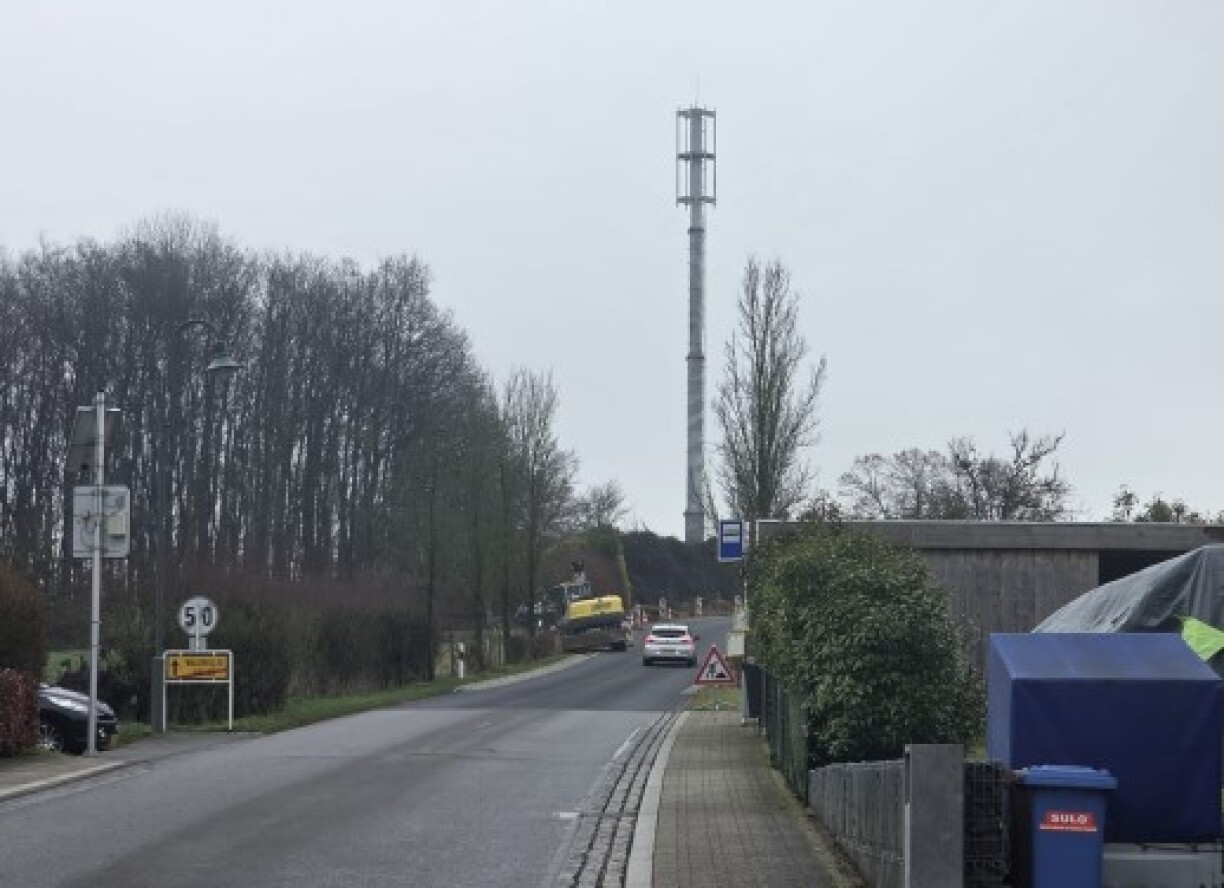
A 42-metre mobile network mast in Haller, in the municipality of Waldbillig, is currently causing controversy. According to a local citizens' group, the structure appeared almost overnight.
Residents say the installation came without warning, and just 200 metres from homes. Both the municipality and the Ministry of Labour insist everything is in order. However, several residents directly affected by the mast are not convinced.
One of them is Marc Van Oost, who noticed a public notice from the municipality last June while out walking, indicating that an antenna mast was planned for a specific site. He said he contacted the municipality to ask what kind of antenna was being installed and what exactly was planned, and was reassured that it would be a small antenna similar to those typically placed on houses.
At the time, he said, that explanation seemed sufficient. Both the municipality and the Environment Agency had told him there was no risk to residents. But that changed when a 42-metre mast was suddenly erected just 200 metres from his home.
Van Oost said that when residents saw the structure, it was immediately clear that it could not be described as a small antenna, as the scale of the installation was far too large.
After contacting the municipality and relevant administrations again, Van Oost said he received no further answers. Waldbillig mayor Andrée Henx-Greischer responded to RTL in writing, stating that the municipality had followed all procedures within its remit, and that the project complies with building regulations and is located in a green zone.
She stated that responsibility for antenna approvals lies with the Ministry of the Environment and the Ministry of Labour. In an emailed statement, the Ministry of Labour said the mobile network operator determines the site for the mast and that minimum distance requirements and exposure limits are respected in this project.
That reassurance does little to calm Tanja Grosbusch, another resident now facing a direct view of the mast. She said residents had not been informed about any studies or whether alternative locations had been considered, adding that they had received no information on the project, including at municipal level, where it had been presented as a small antenna.
After residents formed a citizens' initiative, six people have now hired a lawyer and lodged an appeal against the project, Van Oost explained. He said they had no other choice, as they were effectively presented with a fait accompli. Van Oost said that, according to their lawyer, the planned antennas may not comply with the authorisations granted.


The permit, Van Oost said, allows for a project with a maximum output of 2,500 watts. However, if all 12 antennas foreseen in the plans are installed, that limit could be exceeded.
Grosbusch said that while a few antennas are already in place, it is clear there is still capacity to add more, given the size of the structure and the empty mounting points around it.
Residents now hope that the 2,500-watt limit for this class of antenna will not be exceeded. Van Oost said such concerns are not unfounded, noting that their lawyer had handled several similar cases where comparable practices were identified and where complainants ultimately succeeded in having masts removed.
Grosbusch stressed that residents understand the need for such infrastructure, but not so close to homes. She also noted that for higher-powered antennas exceeding 2,500 watts, a public consultation would normally be required.





