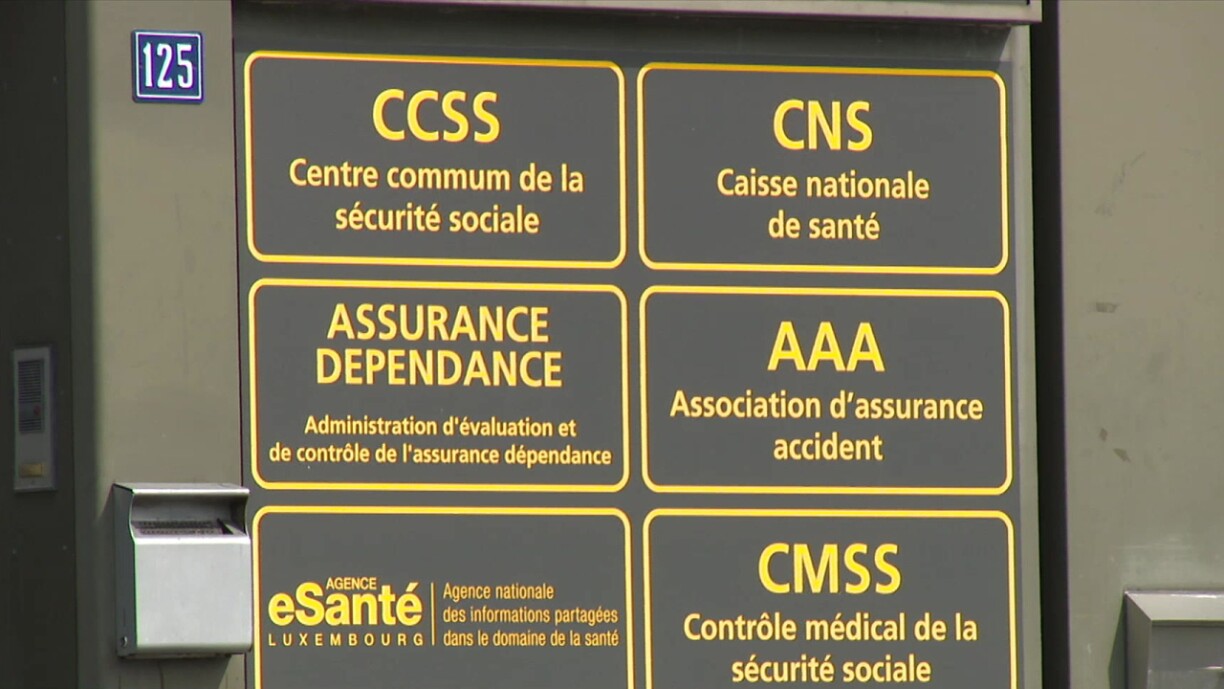
Immediate Direct Payment eliminates the need for the insured person to advance the amount that will be reimbursed by the CNS when they visit the doctor. The patient will only be responsible for any services not covered by their insurance, while the portion covered by the CNS will be paid in full at the same time via electronic payment. Prior to this, and in order to relieve the CNS' workload, where the waiting time for fee statement processing can reach six weeks, an intermediate step was introduced last year with the accelerated reimbursement procedure. The latter operates digitally but has had limited success thus far. For a variety of reasons, digitalisation in the medical sector is stalling in Luxembourg.
This is the ideal scenario: a patient has an appointment with a doctor. After a routine examination, the bill is printed and paid. At the same time, it appears in an app on the patient's smartphone with the details of the treatment. In just a few clicks, the bill is sent to the CNS.
Gabriele Pautler, a patient, describes the procedure as "much easier". "There is no need to prepare envelopes, mail everything to the CNS, only to then wait six to eight weeks," Pautler explains. She can send all documents instantly using the accelerated reimbursement procedure and is usually reimbursed in two to three days. Pautler says she could also see herself receiving "electronic prescriptions" through this app.
However, this is still a long way off in Luxembourg. Officials initially estimated that 700 of Luxembourg's 3,000 doctors would work with the system after its launch in 2021.
Christian Oberlé, President of the National Health Fund, now admits that "the entire process is more complex than we had anticipated, especially with the doctors' software." According to the CNS, between 70 and 90 doctors are currently ready to send invoices digitally and communicate with patients via the application. In practise, however, the programme is only used by about 40 doctors.
The CNS and the Health app are both based on a universal system designed in collaboration with the Association of Doctors and Dentists (AMMD). After one year and €1 million invested, the AMMD regrets that it is being held back in the development of its application.
Dr Guillaume Steichen, secretary general of the AMMD and co-founder of the health application, states that "we wanted to have a global vision for the patient, so that they could send their invoices to the National Health Fund via the application." However, the AMMD also intended to allow the patient to schedule an appointment with their doctor and then send the details of their reimbursement directly to their supplementary insurance. According to the association, there was "political agreement for a global solution." "Unfortunately, it appears that the scope is now limited to an invoice that the patient receives and can then send back," Dr Steichen regrets.
The AMMD calls for further digitalisation and appeals directly to Prime Minister Xavier Bettel, who is also Minister for Digitalisation. The AMMD points out that Bettel spoke out in favour of the project with the association in his state of the nation address in the Chamber of Deputies. The AMMD now sees "no alternative" but for the Prime Minister to personally take charge of this project and to try to re-establish a dialogue with the association. Bettel should do this "in the interest of all residents in Luxembourg, who are currently being left out in the cold because they have to wait six weeks to be reimbursed by the CNS, which is absolutely scandalous."
The CNS stresses that it supports "several good solutions," including new ones that will emerge. No one is held back and everything is subject to the free market, according to the National Health Fund.
Oberlé states that while the AMMD has created "some good things," they are ultimately "a developer like any other" for the CNS. And as a developer, Oberlé argues that it is up to the AMMD to "find the way to introduce this to the public". The President of the CNS states that the National Health Fund has never said that they would not support different features. He assured that the overall product as they it was developed has the support of the CNS.
It remains to be seen what will come out of this digital ping-pong match between the CNS and the AMMD. And as is often the case, the one who has to wait is the patient.