At around 11 am, the moon and sun will begin their routine. As the sun rises in the sky towards the south-east, the degree of coverage of the eclipse will gradually increase. At around 12.20 pm the eclipse will be at its maximum, with the sun's diameter obscured to 26 per cent. The star will then already be at an altitude of 58 degrees and the moon will then gradually disappear from in front of the sun.
At about 1.25 pm, the moon will make its last contact with the sun and the eclipse will be over. The moon's shadow will then extend over 59 other countries. The further north you go in Europe, the more the sun will be hidden behind the moon. The eclipse will be much more spectacular in Russia, Canada and Greenland.
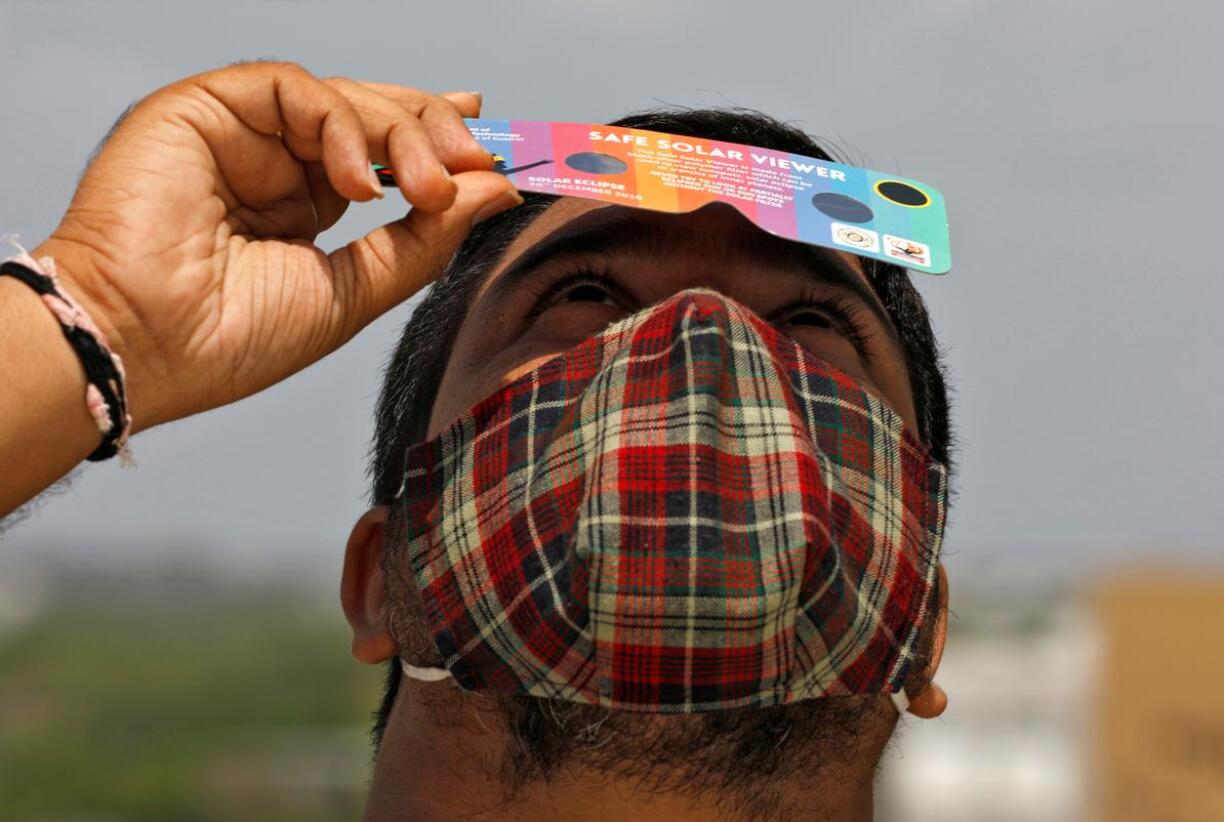
The last time the sun was partially covered over central Europe was on 20 March 2015. The moon hid more than 70 per cent of the solar circle. However, for health reasons, astronomers should never look at the sun without protection, even if it is partially obscured. The same applies to telescopes, which should never be pointed at the sun without a special filter.