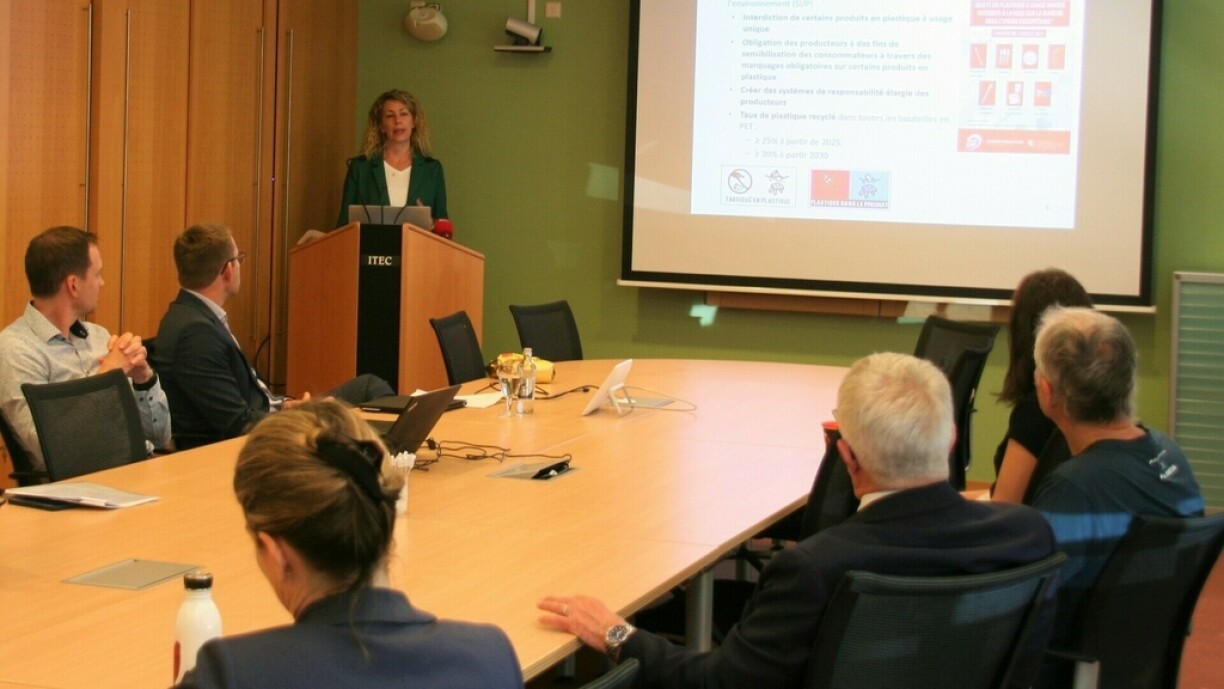
The goal of the new law package is to reduce or even prevent waste, and to promote the recycling economy. It was voted in the Chamber of Deputies on 27 April and aims to give Luxembourg a framework to act more sustainably and save resources.
To achieve this, there is no way around harsher laws and bans. Especially commercial actors like supermarkets will face changes.
Food waste is one of the aspects tackled, says Joëlle Welfring. Supermarkets will have to work out a waste prevention plan to deal with unsold foods according to a certain list of priorities, with human consumption at the top, for instance through food banks, then as animal feed and finally, processing in a biogas plant.
Single use plastic packaging will also be banned. This means fresh produce will be sold unpackaged as much as possible. Plastic bottles must contain a predefined percentage of recycled materials. There are also plans to introduce a deposit for plastic bottles; this is currently in negotiation with neighbouring countries.
Big supermarkets will integrate recycling centres, giving residents easier access to recycling.
Another affected sector are organisers of parties and fairs: "Plastic objects, cups, glasses, cutlery made of plastic which then has to be disposed of at great environmental cost. Now we have laws to do away with that, where there is an obligation to offer reusables." The same applies to restaurants.
Another rule affects unwanted ads and leaflets, which will be limited even further. Rather than the current system where you can indicate you don't want ads with a sticker on your mailbox, the default will now be set to "no ads" and those who still want them can explicitly say so.
Residents should also be encouraged to move away from the so-called "throwaway society" and towards "social reuse", where unwanted or replaced electronic devices can be passed on to others who are less financially secure or simply those who want to save resources.
The first changes are expected to come into effect early next year.







