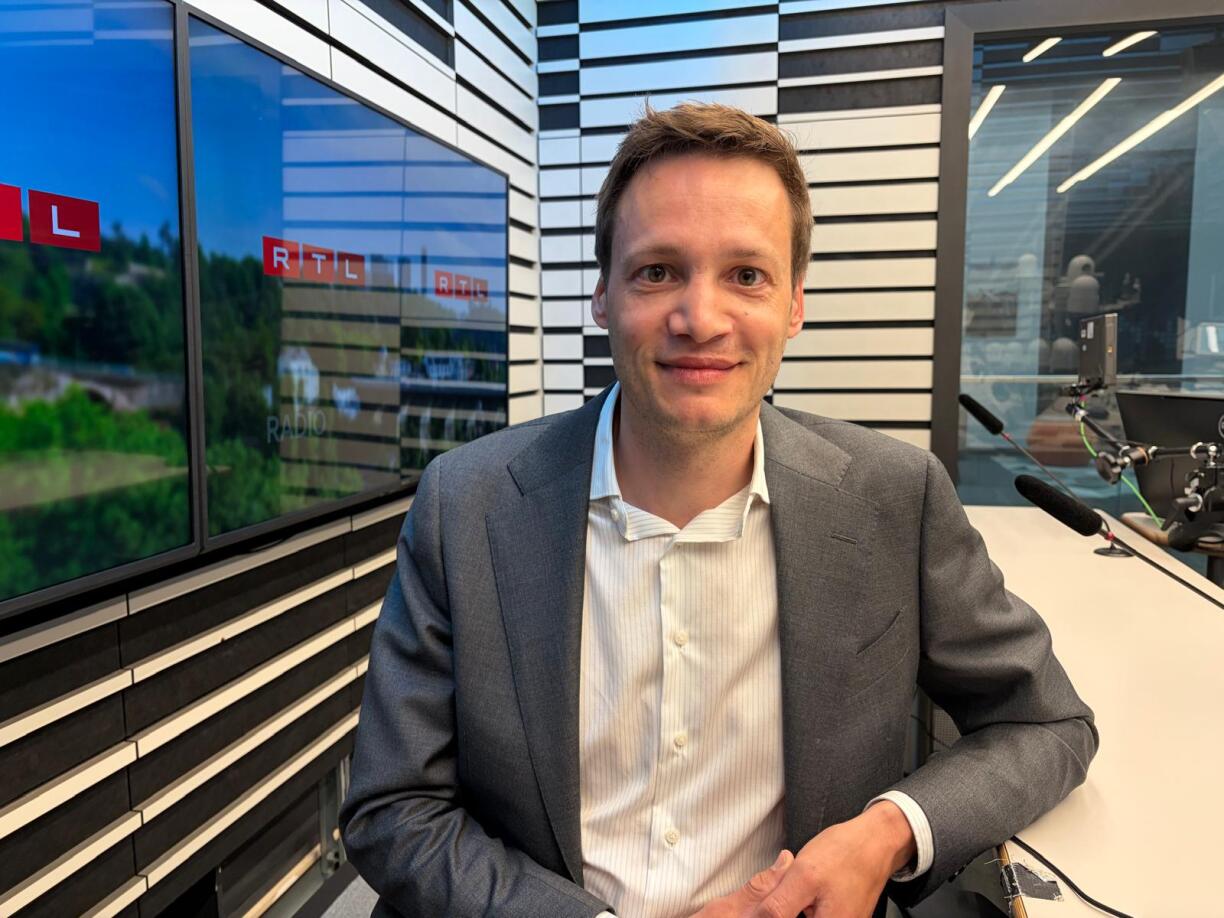
In conversation with RTL Radio on Wednesday, Tom Haas, director of the National Institute for Statistics and Economic Studies (STATEC), said the next wage indexation in Luxembourg is highly likely to take effect on 1 June.
This comes after the latest estimate for April put accumulated inflation since the last tranche at 2.46%, just below the threshold for triggering a new indexation. "We are very close to the threshold," Haas explained, adding that that they will inform the public on 29 May. If it is triggered, the indexation would be applied from 1 June, he said.
However, Haas emphasised that while recent inflation has stayed just under the 2.5% mark, the situation remains volatile. "We are certainly not at the 2022 level, but that can change at any time," he said, highlighting the need for preparation for all possible scenarios.
Discussing the impact of global events, Haas stated that ongoing tensions in Iran and the blockage of the Strait of Hormuz are key factors adding to uncertainty. "The situation changes several times a day," he noted, making it very difficult to make accurate inflation forecasts.
Instead, Haas recommended considering a range of possible outcomes: "All those scenarios are possible and have to be read as such. There is a wide range."
According to Haas, if inflation remains around 2.5%, Luxembourg could see indexations every twelve months on average. "But if inflation rises significantly, for example to four percent, we could see several indexations in quick succession, as was the case in 2022," he warned.
Haas did not exclude the possibility of two indexations within a year, a scenario that could prompt intense political discussions, especially within the tripartite meetings between unions, employers, and government.
He further explained that the current increase in energy prices has been relatively contained due to strategic reserves and shipments that arrived before the onset of the crisis. Still, these are only short-term buffers, according to Haas.
"If the crisis continues and no solution is found in the coming weeks, the situation could escalate very quickly," Haas cautioned, potentially leading to a much higher inflation rate.
When asked what is driving current inflation, Haas pointed to energy: "At the moment, the biggest impact from the Iran crisis comes from diesel and heating oil, where prices have risen the fastest."
He noted that food prices are also expected to experience a "small shock", and this effect could become much larger if disruptions persist. While gas prices have not been directly affected yet, Haas recalled that they played a major role in 2022, with further supply chain issues potentially driving up industrial prices as well.
Drawing comparisons to previous crises, he said: "In 2022, we had high inflation even before the Ukraine war due to supply chain bottlenecks after the pandemic. Now, we risk everything coming together at once."
Haas added that while the numbers currently do not show another spike, it is important to be prepared for rapid changes.
Turning to economic growth, Haas acknowledged that his own optimism from the start of the year has faded. "The cautious optimism we had at the beginning of the year has effectively disappeared over the past months. Now we see many more areas of concern," he said.
He does not expect the labour market to recover quickly, forecasting that unemployment will remain above six percent for an extended period. "The whole conflict has repercussions not only on inflation and economic growth, but also on employment," Haas stated.
He described the risk of so-called "stagflation" – where economic growth stagnates while prices continue to rise – as a real possibility.
"It is not far from the situation we had in Luxembourg over the last three years. We had very weak growth," he said, citing growth rates of 0.1%, 0.4% and 0.6% in recent years. "For Luxembourg, that's very little," Haas observed .
Haas also highlighted recent improvements in statistical data on poverty and income. Last week, STATEC published new statistics that use administrative data, resulting in more accurate and reliable figures. "Now we know, down to the decimal point, what has actually been paid," he explained.
According to Haas, this means that the indicator for poverty is much more robust than it was, and allows for more evidence-based policy decisions. He added that the switch to administrative data also means surveys can be shortened, as European-wide statistics become more comparable across countries.
"With accurate figures, we can better inform political decisions, especially in times of crisis," Haas said, welcoming the increased precision.
As tripartite meetings get underway this week, Haas underlined the importance of STATEC's role as a neutral provider of data and analysis. "We deliver the figures, we deliver the diagnosis, our analyses are completely neutral," Haas stated.
He stressed that STATEC's independence is both legally enshrined and consistently practiced. Haas concluded that it is crucial for policymakers to consider all scenarios and plan accordingly.