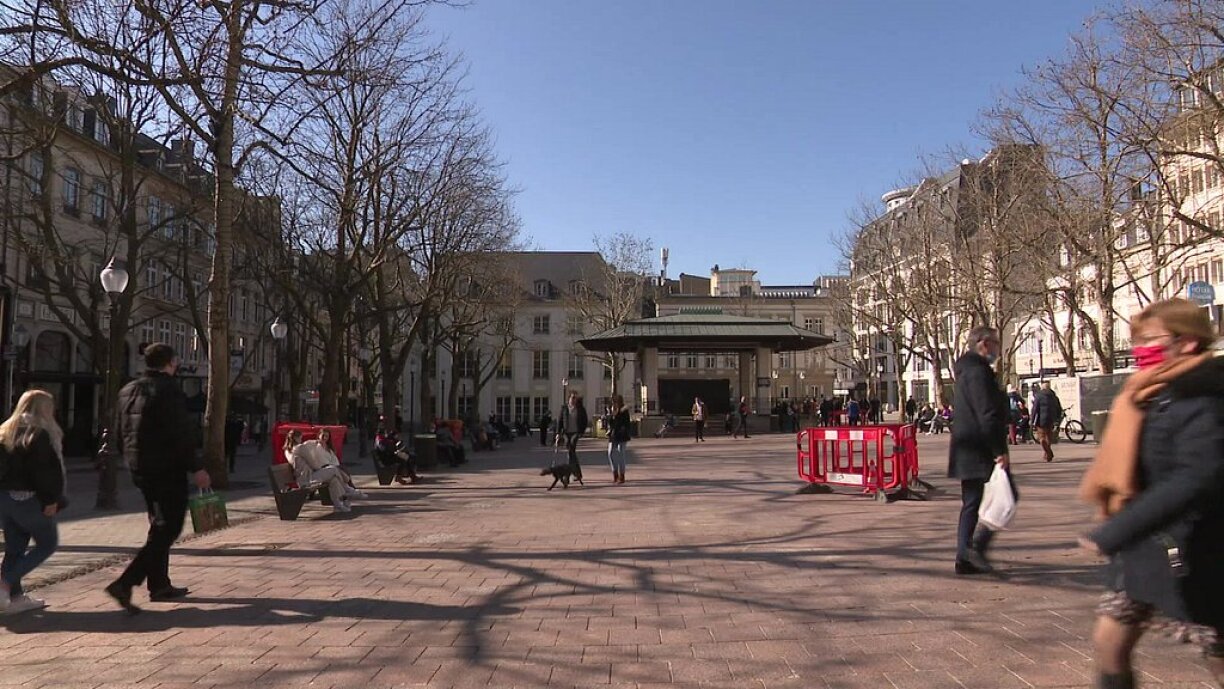
Obligatory masks, limits on people you're allowed to see, curfews... these rules have been tightened and loosened repeatedly, making it hard to keep track at times. 350 police checks took place last week, with around 250 people fined. 60% of them had ignored the curfew.
The 11pm to 6am curfew is undoubtedly one of the most restrictive measures imposed. There are a total of nine permissible exceptions, such as professional activities, doctor's appointments, or the needs of a pet.
Unlike in some other countries, there are no movement restrictions the rest of the day. Gatherings in public are permitted indoors and outdoors, as long as there are fewer than 100 people present. Consuming alcohol in public is not allowed.
The protective measures ("gestes barrières") must still be respected. Masks are obligatory in shops, supermarkets, public transport and administrations. Masks must also be worn whenever more than four people not from the same household meet. In addition, they must maintain a physical distance of 2 meters. For public gatherings between 10 people and 100 people, there must be assigned seating. Children up to 6 years are exempt from wearing a mask.
Private gatherings at one's home are still restricted to 2 guests who are part of another household.
Leisure activities work under the same rules as gatherings. Exercising is allowed without a mask, but with a maximum of two people. Up to 10 people can exercise together if a 2 meter distance is maintained.
Shops are open, but limited to one customer per 10 square meter.
Cafés, bars and restaurants remain closed, but take away, drive in or delivery are allowed. Hotels are open, with room service only.
Cultural institutions such as museums have reopened, but also underly strict rules and masks are, of course, obligatory.