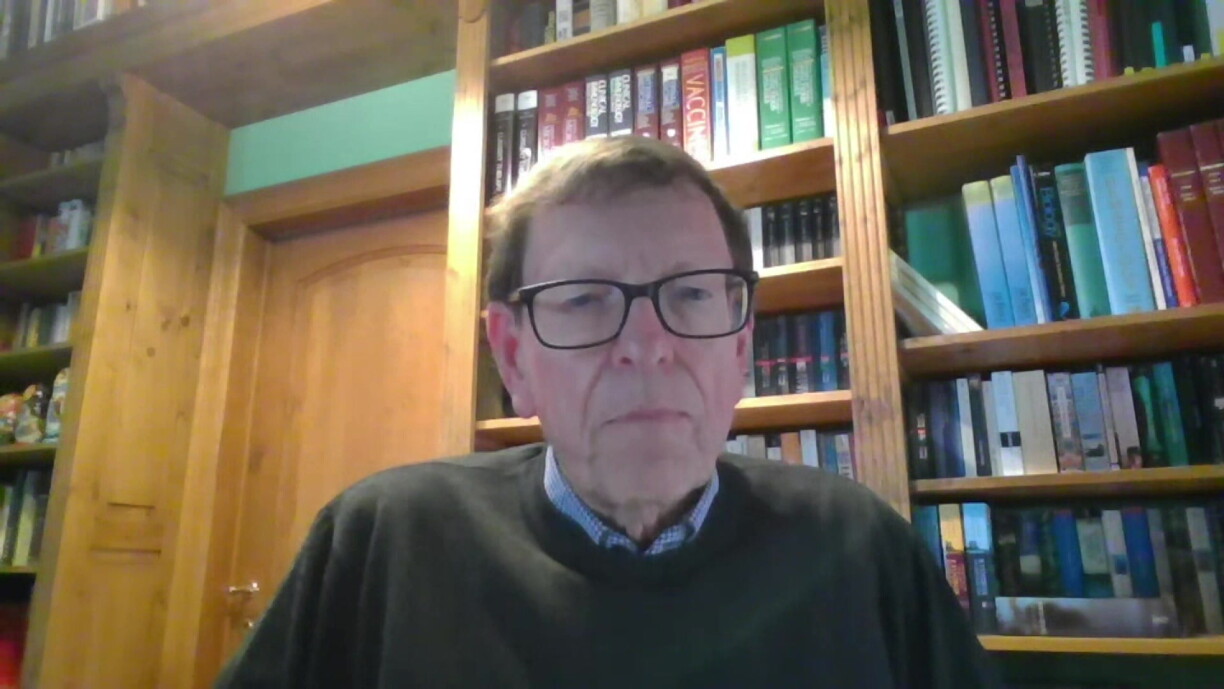
The hantavirus cannot be compared to what happened with the coronavirus, according to Prof Dr Claude P. Muller, a virologist at the Luxembourg Institute of Health (LIH).
Prof Dr Muller noted that hantaviruses are not new and are well researched. There are over 50 known hantaviruses, about half of which can infect humans. Infection requires direct contact with dust or secretions from the corresponding animal hosts, he explained.
There is, however, one exception. Among all known hantaviruses, only one – the Andes virus – can spread from human to human. This is the exact virus that has recently stirred discussions, Prof Dr Muller said.
Even though the virus can spread, the virologist sees little danger, noting that its infectivity is low.
If infection does occur, however, the mortality rate is high. Prof Dr Muller pointed out that this is also evident from the current outbreak. Nevertheless, he noted that these isolated cases are under control and that infected patients have been isolated.
The patients currently being treated in hospitals across Europe do not represent a danger, the LIH virologist said. He explained that they are fully isolated and that there is no reason to fear a potential threat.
At present, it is not yet known at which point a patient becomes infectious – whether earlier in the course of infection or only after symptoms have already developed, Prof Dr Muller added.
Prof Dr Muller stated that he is certain the recent hantavirus outbreak will not lead to a pandemic, arguing that the virus's infectivity is far too low. According to the virologist, the situation is nothing like what happened with the coronavirus.
Regarding the potential for spread, Prof Dr Muller also sought to reassure, noting that the virus has little opportunity to mutate given the low number of infections.
As such, there are no concrete recommendations for the general public.
"No, absolutely not", the virologist answered when asked whether people need to take any special precautions. The World Health Organization (WHO) has also not recommended any travel restrictions.
Interview in Luxembourgish: