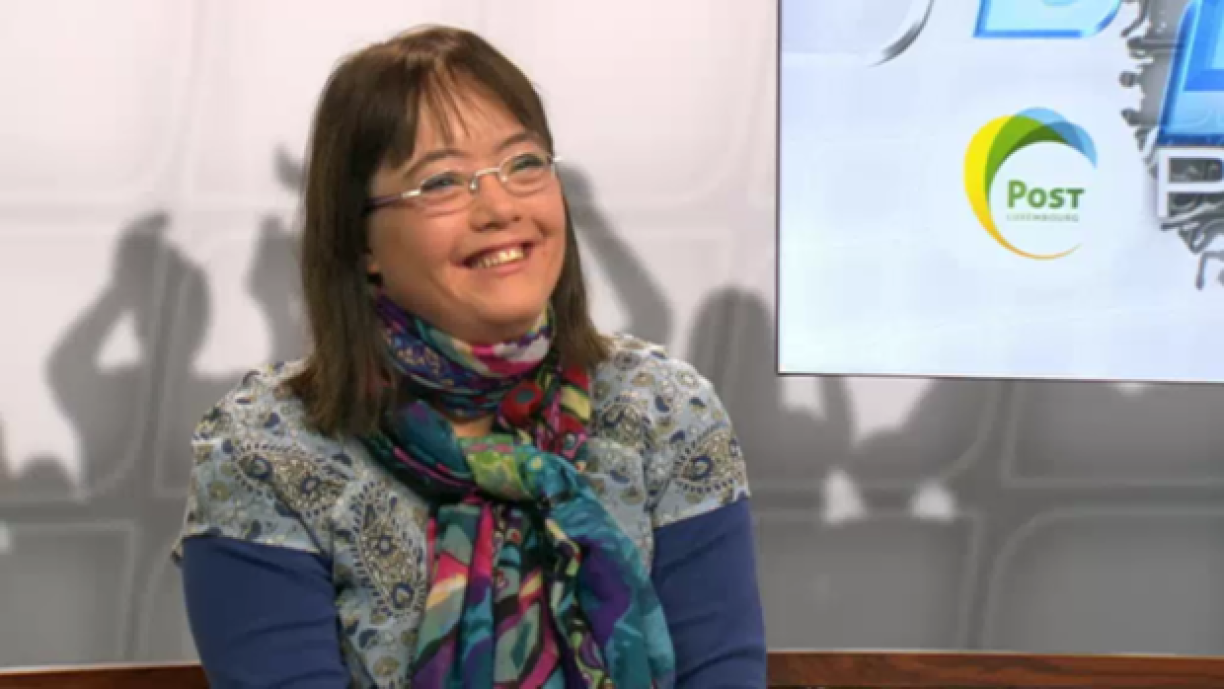
For a person with Down syndrome, the last twelve months have not been easy. "Most of all they're missing social contact. That's a big issue. They're missing physical contact, hugging each other. Friendships and social activities are strongly missed", says Martine Eischen, president of the ASBL.
Certain people have lost their autonomy, resulting in difficulties to express themselves simply because they're out of practice. The organisation supports individuals as far as coronavirus measures will allow. "As soon as it's possible, our activities are back. We're always wearing our masks and using disinfectants. Our members, meaning people with Trisomie 21, have no problem using masks, and that's a relief to see. They're taking it very seriously, keeping their masks on, disinfecting their hands, maintaining social distance."
Eischen remembers the state of shock the organisation was in when the pandemic started a year ago, but they were quick to switch to digital solutions: "The first thing we did was organise online dance classes. Our staff was very creative. The team really put their heads together to try and maintain close contact with our members, and in turn our members with us."
Further activities were added, including sending recipes to their members' homes for them to cook a meal. Eischen is looking forward to the end of the pandemic, however.
The ASBL is publishing a book about the evolution of Trisomie 21 in the last 21 years, which can be ordered here.





