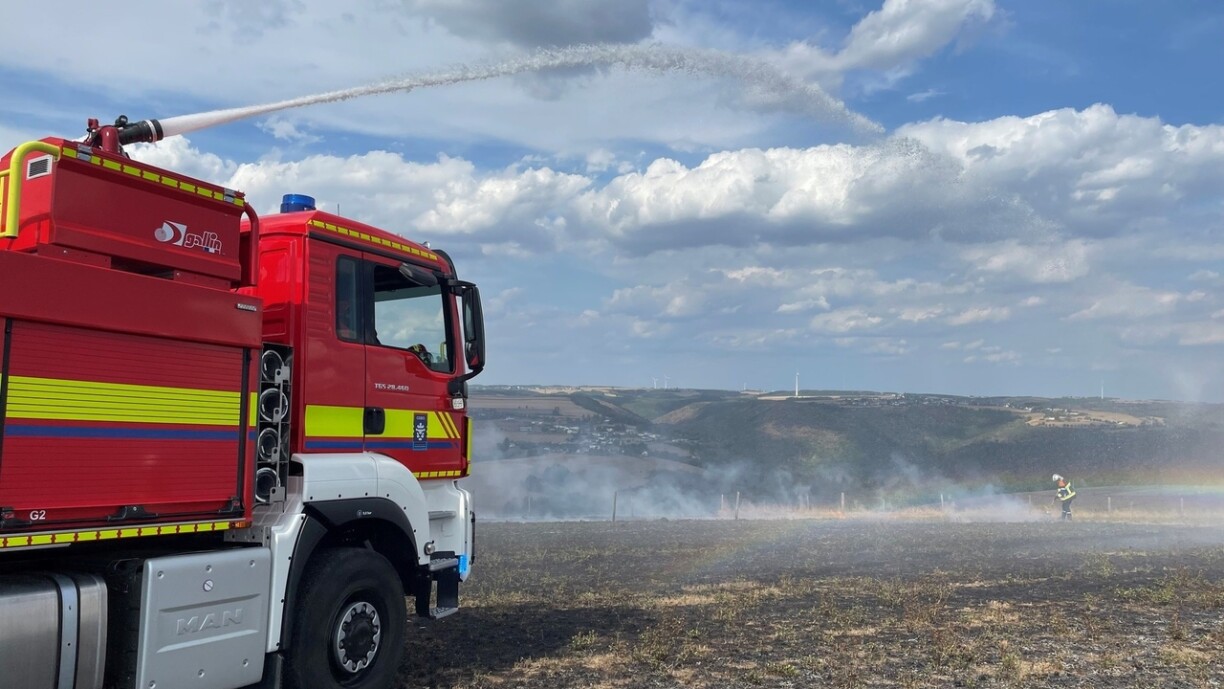
Wildfires of unprecedented scale have devastated parts of Europe this year, but Paul Schroeder, Director General of the Grand Ducal Fire and Rescue Corps (CGDIS), points out that such extreme events are not entirely new. Recalling the violent fires in the Gironde region of France in 2023, he stresses that Europe has faced comparable crises before. What has shifted, Schroeder explained in an interview with RTL on Friday morning, is the clear increase in how often and how intensely these fires occur.
According to Schroeder, Luxembourg is unlikely to face Mediterranean-style blazes in the immediate future. The country's more diverse and less flammable vegetation provides a degree of protection. However, he warns that climate trends mean the traditional risks associated with southern Europe are gradually moving north, and countries like Luxembourg must remain vigilant as the potential for forest fires rises.
In recent years, Luxembourg has made significant progress in bolstering its wildfire response, although Schroeder acknowledges that more can still be done. While investing in dedicated water-bombing aircraft or helicopters is not currently a priority for Luxembourg, the CGDIS chief is careful not to rule out any future options, remarking, "never say never". He emphasises that any decision on specialised aerial resources would depend on a careful evaluation of the actual risk, the financial costs, and the training required for such investments.
A particular advantage for Luxembourg is the presence of the Aquarius company, which is based in the country and operates firefighting planes. While these aircraft are often stationed abroad during fire season, they could be leased in an emergency. Schroeder also reminds the public that most wildfires are typically tackled from the ground, without always needing air support.
Luxembourg's fire and rescue teams have also faced mounting pressure from this year's repeated heatwaves, resulting in a spike in call-outs to assist the public. Preparations are underway to ensure that enough personnel are available and that working conditions allow firefighters to recover between missions, even during extreme heat. Vehicles have also shown signs of strain, with some air-conditioning systems failing under the demands of more frequent operations.





