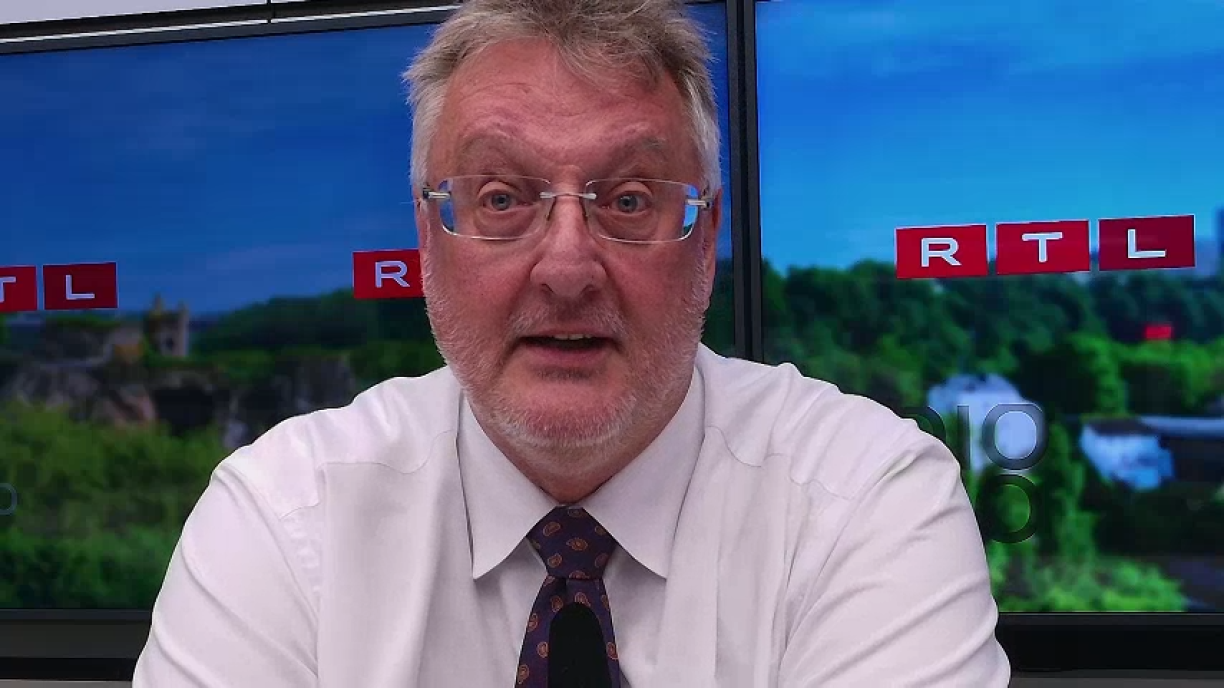
The annual collective leave for the construction sector has begun and will last until 23 August, giving most construction workers time off. However, Marco Boly, Director of the ITM (Inspection du Travail et des Mines), said the situation is more complex than it may appear, with not all professions or companies involved and some granted exceptions for essential work. Boly mentioned that the ITM received 212 requests from companies seeking permission to continue operations, so it would be wrong to assume that all workers in the construction sector are off during the annual collective leave period. Whether these derogations are granted is decided by a paritary committee, including both employer and union representatives, with the ITM only acting as the secretariat and keeping records of which sites can operate and which must close.
Boly clarified that the committee grants exceptions mainly for urgent or specialised tasks. The ITM then uses this list to inform its inspections during the leave period, ensuring that only approved sites are operating. Companies that operate without authorisation despite the collective leave rules are required to stop to maintain fair competition.
Moreover, Boly notes that he did not notice a trend towards more requests for exceptions, or increased work during the collective leave. He estimated around 4,000 people work in Luxembourg’s construction sector, with about 750 affected by the exceptions, figures that are manageable and more or less stable over time. Boly also addressed concerns that the ITM acts like a police force, emphasising that they are “preventive rather than repressive”. The ITM is focusing more on dialogue with businesses and now sends observation letters before starting any formal procedure, and this approach has yielded results. In 5,000 cases, about half of the inspections were rectified without further action needed.
Boly was asked about illegal employment (travail clandestin) and whether the ITM might be missing hidden problems. He explained that the term is often misunderstood in Luxembourg, explaining that it covers a broad area and is mostly about whether, from a legal perspective, workers are affiliated with the social security system. He acknowledged that while ensuring affiliation is essential, other authorities are also responsible for uncovering undeclared work.
Turning to the ITM’s evolving mission, Boly pointed out that its workforce has more than doubled over the past decade, with the number of inspectors rising from 47 to 143 to adapt to changing work conditions and the evolving labour market. Boly noted that Luxembourg now counts over 500,000 employees, and international guidelines suggest one inspector per 10,000 workers. Moreover, the ITM has gained many new responsibilities, including issues relating to harassment, the right to disconnect, forced labour, and platform work. On the ongoing government-backed reform of the ITM to make it operationally modern and structurally up-to-date, Boly notes that while the reform started in 2018, it was delayed by the change of government.
Boly also commented on complaints and their distribution across sectors. The number of complaints rises with the growing workforce, especially in times of crisis, he said. However, the sectors receiving the most complaints have remained constant: construction and the Horesca sector. Boly notes that the main issues are unpaid wages, leave, and overtime, areas that have seen the same kinds of infractions for years.
On platform work, such as food delivery services, Boly said the ITM’s task is to follow legal definitions and ensure fair conditions. He explained that the ITM determines, together with legal authorities, whether someone is genuinely independent or not and, if they can prove subordination, a reclassification to employee status is possible. He stressed that platform work is now part of the economy and must offer fair competition and reasonable conditions for workers. Boly added that Luxembourg has not completely overcome class divides, but the pandemic underlined the importance of essential workers. He also appreciates the efforts of labour minister, Marc Spautz, to revive social dialogue and stresses the ITM's continued engagement to overcome class divides regarding labour rights.





