
Here are five things you should know at the end of this week:

Record-breaking summer ahead – Luxembourg Airport anticipates handling around 5.7 million passengers this year, with a 13.5% increase during the summer months compared to last year. To manage the seasonal rush, the airport has hired extra staff, modernised digital information screens, and introduced new measures to streamline security and passenger flows. These efforts are part of a broader push to enhance comfort and efficiency for travellers.
Terminal expansion and upgrades – Major infrastructure projects are underway, including the expansion of Terminals A and B. Construction is set to begin next year, with Terminal B expected to be finished by the end of 2028 and Terminal A four years later. Once completed, the airport will be able to accommodate up to 53 aircraft simultaneously, nearly doubling current capacity, in response to rising passenger numbers and Luxair's growing fleet.
Direct US flight under discussion – Efforts are ongoing to re-establish a direct flight between Luxembourg and New York, more than 25 years after the last transatlantic service ended. US Ambassador Stacey Feinberg has made this a top priority, citing benefits for both business and tourism. While Luxair is not able to operate the route itself, it supports the initiative and is open to partnerships, with the final decision resting with a US carrier.

Platform targets daily commuters – Luxcov was launched by Martin Stoz with the goal of making daily carpooling easier for cross-border workers travelling from Belgium, France, and Germany to Luxembourg. Unlike other platforms that focus on occasional trips, Luxcov is tailored to regular commutes, helping users coordinate rides to and from work. The platform is free for private users, with no commission taken on trips.
Early uptake and future growth – Although still in its early days, Luxcov has attracted around 100 users and offers approximately 25 regular routes. Stoz believes the platform's long-term success depends on increasing the number of available routes, making it easier for users to find suitable matches. The founder remains committed to keeping the service free for individuals, with ride contributions agreed outside the platform.
Business offering and sustainability – In addition to serving individuals, Luxcov provides a business plan for companies interested in promoting carpooling among employees. This version allows firms to track shared kilometres and the resulting reduction in CO₂ emissions, supporting more sustainable commuting habits. Stoz hopes that, over time, Luxcov will become a practical and established alternative for daily travel to Luxembourg.

Council criticises mild reforms – In a report published at the start of the summer, the European Council concluded that Luxembourg's latest pension reform does not go far enough to address looming financial challenges. The reform, effective from January 2026, raised employee social contributions and gradually extended working life, but the Council warns these measures are insufficient to ensure the system's long-term viability.
Demographic pressures mounting – Luxembourg faces a demographic squeeze, with the number of retirees rising faster than contributors. Official projections suggest the main pension fund could fall into deficit as early as 2029 without robust employment growth. The Council highlights that Luxembourg's workers retire earlier and spend longer in retirement than the EU average, compounding the financial strain on the pension system.
Older workers and future choices – A key concern is the low employment rate among people aged 55 to 64, which lags behind the EU average. The Council recommends restricting early retirement and boosting older worker participation. With no demographic or economic boom expected, Luxembourg's government may face renewed pressure to revisit pension reform after the 2028 elections, potentially considering further increases in contributions, taxes, or changes to retirement age.
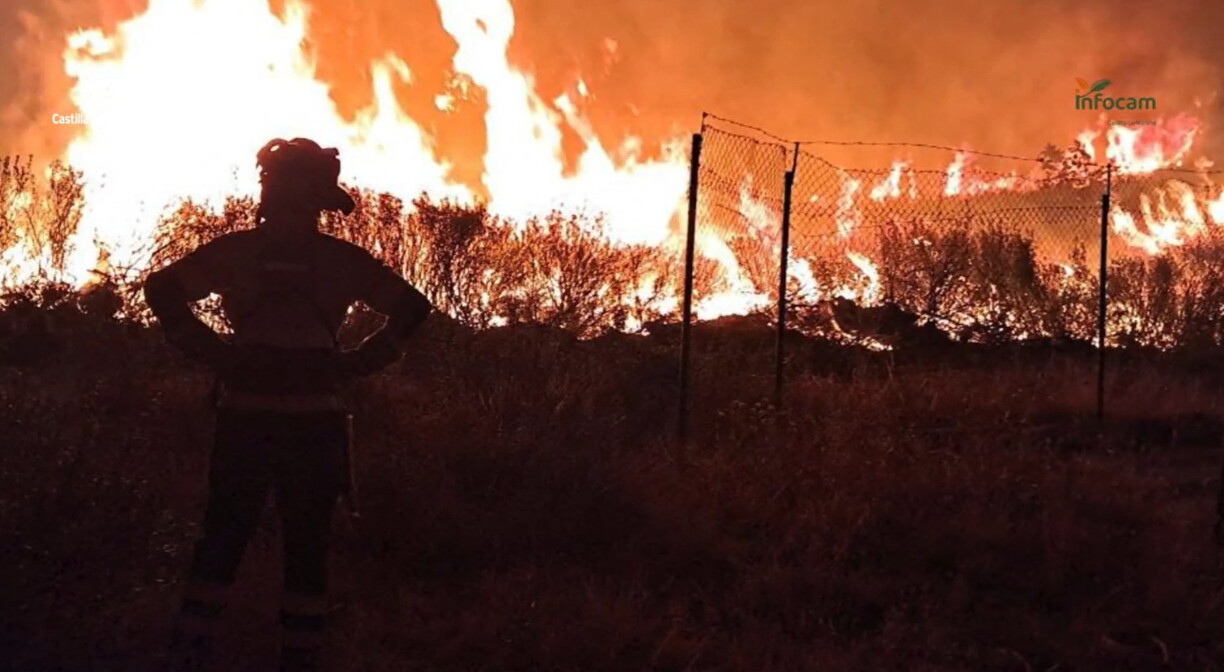
Unprecedented scale and impact – Wildfires in France and Spain have devastated vast areas, with over 42,000 hectares burned in France's Gironde region and 77,000 hectares in Spain. The fires have destroyed hundreds of homes and forced mass evacuations, disrupting daily life for residents and tourists alike. Authorities warn that the situation remains volatile, especially with a new heatwave forecast to bring temperatures up to 40°C in parts of both countries.
Luxembourg joins firefighting effort – Luxembourg has dispatched a firefighting aircraft and 15 firefighters to Gironde, supporting French crews under the EU's civil protection mechanism. The aircraft, temporarily leased from a Cargolux subsidiary, marks a rare deployment for Luxembourg, which does not maintain a permanent fleet. Prime Minister Luc Frieden highlighted the importance of cross-border solidarity and indicated that Luxembourg may need to strengthen its wildfire response capabilities in the future.
On the ground: anxiety and resilience – Seasonal workers, including Luxembourg's Julie Dolar at a Lacanau campsite, describe a tense atmosphere as evacuations unfold and uncertainty grows. Staff remain on site while tourists are moved out, with many keeping bags packed in case of sudden evacuation. Despite some stabilisation, authorities and locals remain on high alert, with strong winds and dry conditions threatening to reignite or spread the fires further in the coming days.

Attack shocks Berlin Pride – The attack occurred as hundreds of thousands gathered for Berlin's Christopher Street Day, one of Europe's largest Pride events. The suspect, Abdul Ballout, drove a minivan into a crowd before attacking people with a machete, resulting in one death and 29 injuries. The violence abruptly ended the celebrations and triggered a large-scale police response, with emergency services treating dozens at the scene for injuries and shock.
Suspect's background questioned – Abdul Ballout, a 21-year-old German citizen with Lebanese roots, was previously convicted for violent offences and had attempted to join the Islamic State group in Syria. Despite his record and a recent conviction for planning a serious act of violence, his sentence was suspended allowing him to remain free. This has led to widespread criticism from politicians, security experts, and police unions over perceived failures in monitoring and supervision.
Political fallout and next steps – In the aftermath, Interior Minister Alexander Dobrindt announced plans to toughen security laws, including more use of electronic ankle monitors and preventive detention for high-risk individuals. The incident has sparked debate over Germany's juvenile criminal law and the balance between civil liberties and public safety. With Berlin's state elections approaching, the attack has intensified political scrutiny and calls for urgent reforms.
Your Weekly Recap is published every Friday at noon.
Read earlier versions here.