The Grand Ducal Fire and Rescue Corps (CGDIS) has added 76 vehicles and a new multipurpose boat to its fleet.
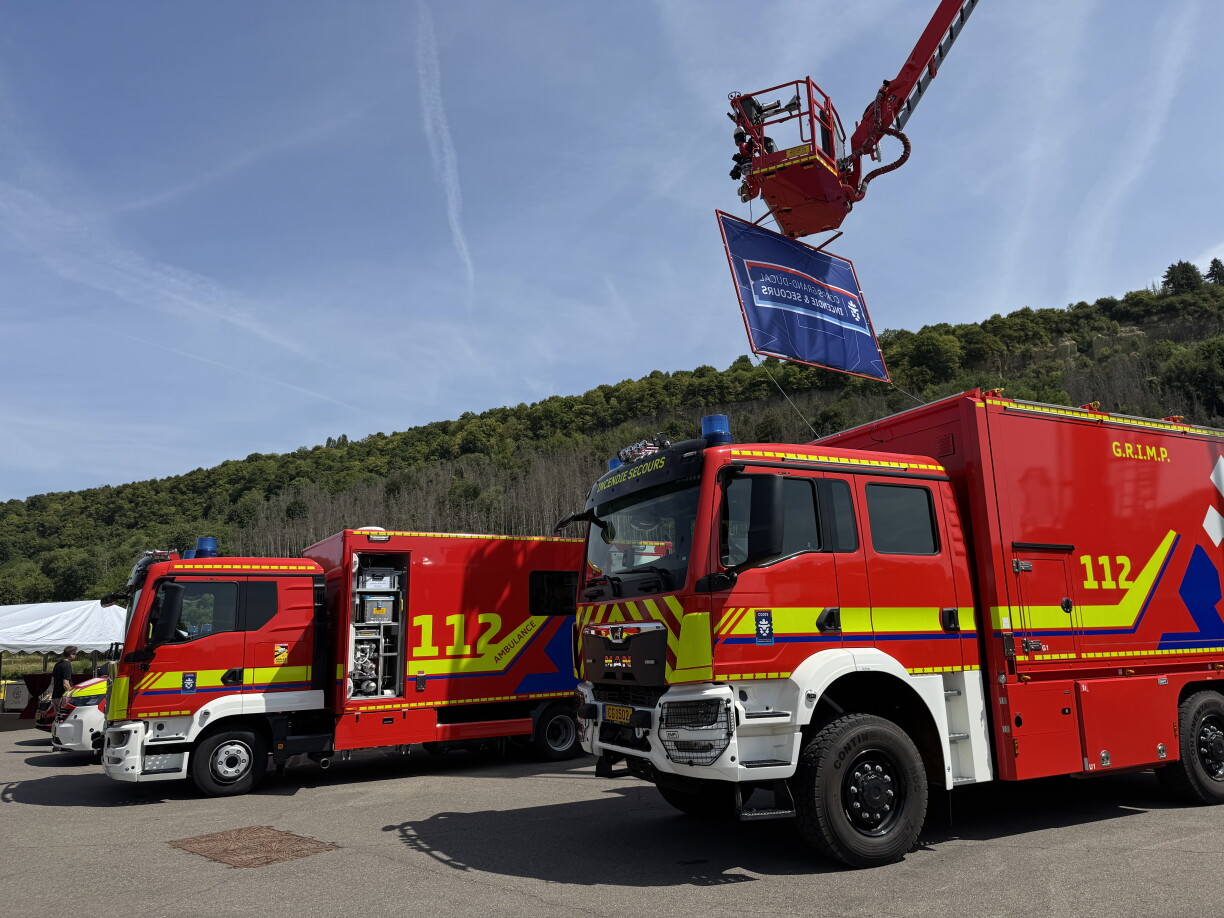
The new CGDIS vehicles were lined up beside the Moselle in Mertert on Thursday afternoon as part of Home Affairs Minister Léon Gloden's summer tour of fire and rescue stations across the country.
Alongside five red emergency vehicles with the service's distinctive yellow markings stood a white electric logistics lorry designed to transport equipment. A few metres away on the river was the CGDIS's new multipurpose boat.
Measuring just over eight metres and costing €175,000, the vessel will be used for operations including the rescue of people and animals, firefighting, and the deployment of oil containment barriers.
Gloden was also taken for a trip on the boat after putting on a life jacket.
"Investing in modern equipment is essential if the CGDIS is to fulfil its various responsibilities towards the population", the minister said.
While disasters could not always be prevented, he added, the emergency services could prepare themselves so that a disaster did not develop into a crisis.
Luxembourg also plans to purchase a larger firefighting vessel jointly with the German state of Rhineland-Palatinate. The boat will be capable of evacuating people from ships and tackling fires involving oil storage tanks. It is expected to be partly financed through European funding.
The seven new types of vehicle displayed in Mertert on Thursday have a combined value of around €2.5 million to €3 million.
Christian Schmitz, head of the CGDIS Fleet and Logistics Department, said the 76 vehicles and the boat had cost between €10 million and €12 million in total, although the expenditure was spread over several years.
He explained that some of the vehicles introduce new capabilities, while others are replacing older models. These include some of the 30 new service vehicles and 38 new crew transport vehicles. he said.
Among the additions are three intensive care transport vehicles, which allow patients requiring continuous intensive medical care to be transferred safely.
"They are mainly intended for transfers from one hospital to another or over long distances", professional firefighter Mike Weber explained. "There is plenty of space, and we can work effectively on the patient."
Another new addition is a specialist vehicle for the Hazardous Environment Reconnaissance and Intervention Group (GRIMP), which carries out rescues at height and below ground.
"What is special about this vehicle is that it has anchoring points all around it", said Andy Martin, head of the specialist GRIMP rescue unit.
This means crews no longer have to find a suitable anchoring point before beginning an operation, allowing them to respond more quickly. The vehicle can also carry more rescue equipment, according to Martin.
At the end of the visit, Gloden put on a helmet and was raised to a height of 32 metres on the CGDIS's new telescopic platform. The €1.2 million vehicle will be used for rescuing people and animals as well as fighting fires.
The fleet also now includes a new electric logistics lorry worth €340,000. Schmitz said the needs of the emergency services were constantly evolving and that the CGDIS had to adapt accordingly.