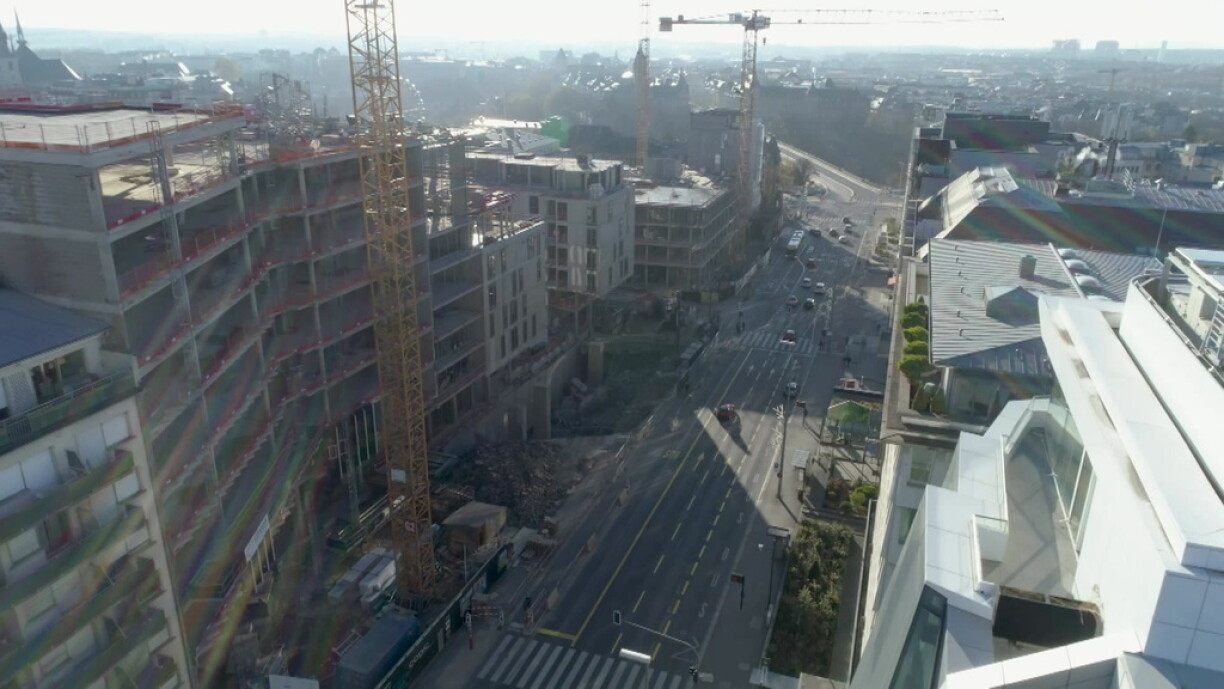
Municipalities selected the areas to be measured in an endeavour to best represent each municipality, taking into account factors such as population density, high amounts of traffic, or planned land development. The Environment Agency's Claude Magar explained that measuring the various stations took place in two phases.
The first phase involved 29 municipalities with 76 measuring areas, alongside eleven areas selected by the Environment Agency and those selected by the capital city. The second phase will involve 24 municipalities and 56 measuring stations.
Of the 102 areas measured, five recorded high levels of nitrogen dioxide: Differdange, Echternach, Esch-sur-Alzette, Hesperange, and Boulevard Royal in the capital. A further eleven areas recorded levels nearly breaching the limit.
The areas are specific areas within municipalities and do not refer to the entire towns in question. Magar provided explanations, stating that the five areas with high levels are areas with high amounts of traffic passing through. Rural areas did not have any issues.
Magar explained that the collective leave in August means that there are fewer people in Luxembourg, which shows the impact traffic has on NO2 emissions. As there is less traffic in August, NO2 emissions are lower.
Over the last few years, the Environment Agency has reported that NO2 emissions are becoming lower in its official station measurements. The introduction of the tram in the capital has also contributed to the positive trend.
In general, Luxembourg's air quality is relatively good, but the Environment Agency will continue a third phase in its project, due to start in January 2020, in order to continuously monitor air pollution.
To find out more about air pollution in your area, check out the "Meng Loft" app.