Luxembourg's healthcare sector is heading towards a new regulatory framework after negotiations between doctors and the National Health Fund (CNS) failed to produce a new convention.
It had been clear from the start that each party's position had hardened. What matters now, said Georges Clees, communications officer at patient advocacy group Patientevertriedung, is a firm assurance that patients will not face any deterioration in service.
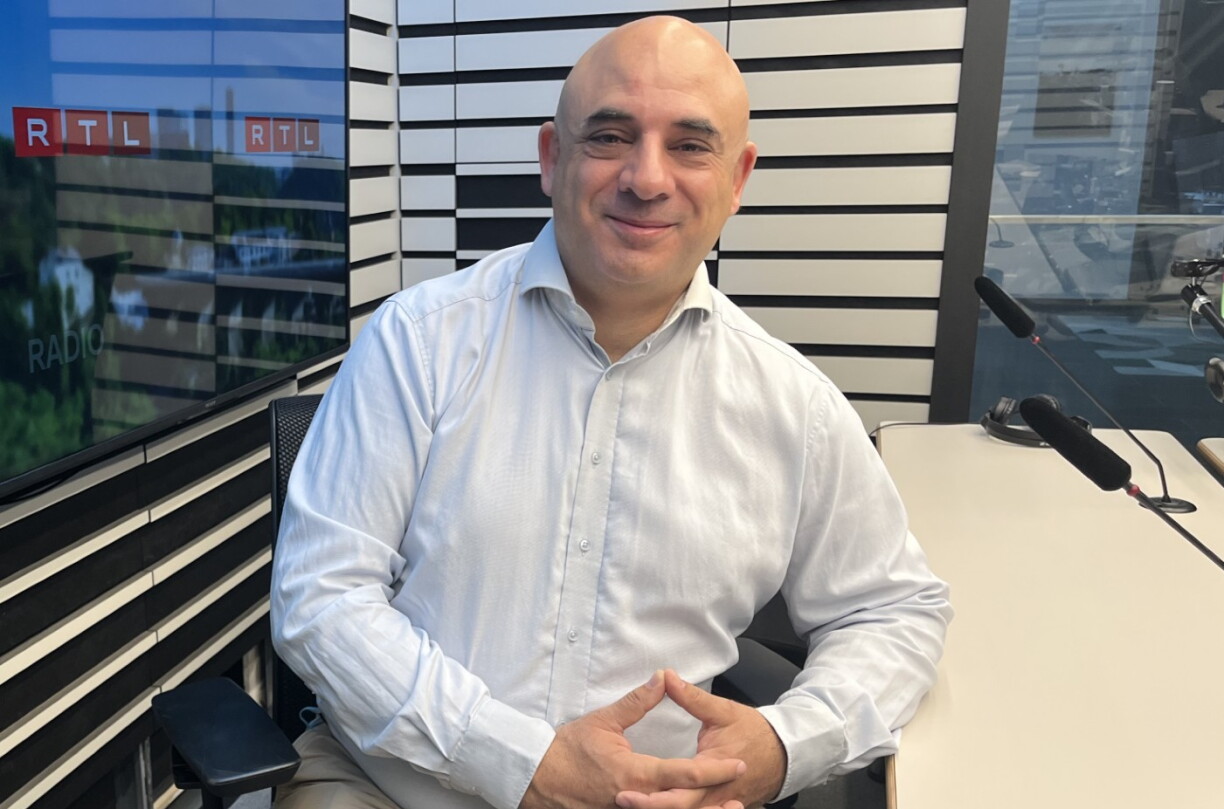
Clees spoke to RTL on Friday morning, discussing the standoff between the Luxembourg Association of Doctors and Dentists (AMMD) and the National Health Fund (CNS).
From November onwards, tariffs and reimbursements in the healthcare sector will be governed by Grand Ducal regulations, since no agreement has been reached on a new convention. The two sides have very different interests, but the Patientevertriedung is still hoping that further discussions and negotiations will take place.
Addressing concerns about legal certainty, Clees explained that the patient advocacy group had initially had doubts, but those had been resolved after consulting legal experts and receiving additional assurances from the ministry. Despite the impasse, he emphasised, there is currently no reason for patients to fear disruption in healthcare or reimbursement.
Clees agreed with the country's hospital doctors that clarity is needed on how the sector should evolve over the next 10 to 20 years. To get there, he argued, concrete figures are needed, and those have been missing for some time. That, in his view, is why the new Health Observatory, with clear figures and projections, is so important.
Clees also voiced strong reservations about the continued existence of charges for "convenance personnelle", meaning personal convenience, such as private rooms and supplements for first-class hospital stays. "There are no additional services in first class. You have your own room, but you get the same medication, and the doctor does the same job as for everyone else", Clees stated.
Charging a supplement for single rooms, he argued, is no longer justified. "Why is that fair? Historically, there were very few first-class rooms. Now there are more, and for example, in the first design for the new Südspidol, the plan was to have only single-bed rooms, because studies show this benefits patients, reducing the number of infections and boosting recovery."
If single rooms become the standard, Clees insisted, the supplement should disappear. "You cannot say that if the whole hospital has only single rooms, everything should cost 66% more. That would not work." While the system, he acknowledged, has to think about funding, asking patients to pay extra for basic comfort is not acceptable.
Clees also noted that, alongside the AMMD, hospital doctors have raised their own issues and priorities. "Perhaps it makes sense to bring all three parties, the AMMD, hospital doctors, and CNS, together to find a shared solution", he suggested.
He reiterated that the patient advocacy group was ready to take part in any renewed dialogue. "We are ready to work together as we did in the last health dialogue. People must sit down and find a solution, because at the moment, no one is winning."
Clees welcomed the creation of the Health Observatory, designed to address the lack of reliable data in the health sector. "Until now, decisions were often made blind, without reliable statistics. For example, we did not even know exactly how many doctors were practising, or their workloads", he explained.
"The Observatory is an important tool so that the health system can be steered with real data, not just intuition", Clees added.
Raising the ceiling on contributions has long been a demand of the Patientevertriedung, though the organisation continues to oppose raising contributions across the board. That position comes against the backdrop of Health Minister Martine Deprez's recent interview in the Lëtzebuerger Land, in which she flagged the need to raise contributions by a further 0.2% or 0.3%.
Clees stood firmly by the organisation's line, arguing that lifting the contribution ceiling would make high earners pay a proportionally greater share.
"We have said for years that contributions should not necessarily increase, but the contribution ceiling should be raised, or at least considered. High earners could give back more to the system, instead of shifting the burden to the middle class", Clees stated.
Politicians, he noted, have so far shied away from that option, though he maintained it would make the system fairer.
Responding to recent high-profile complaints, including the Philippe Wilmes case, Clees said that while things have quietened down, the patient group still receives questions and concerns from members of the public. "If you are unsure, you can always contact us to check if things were handled correctly", he encouraged. He also urged that every patient has the right to seek a second opinion. "That is a patient right, no one should forget it."
Clees ended by underlining the importance of good communication between doctors and patients, noting that misunderstandings or a lack of information are often at the root of complaints. "Communication is the most important thing", he said, and highlighted that the patient advocacy group offers newsletters and personal advice to help inform and reassure patients.