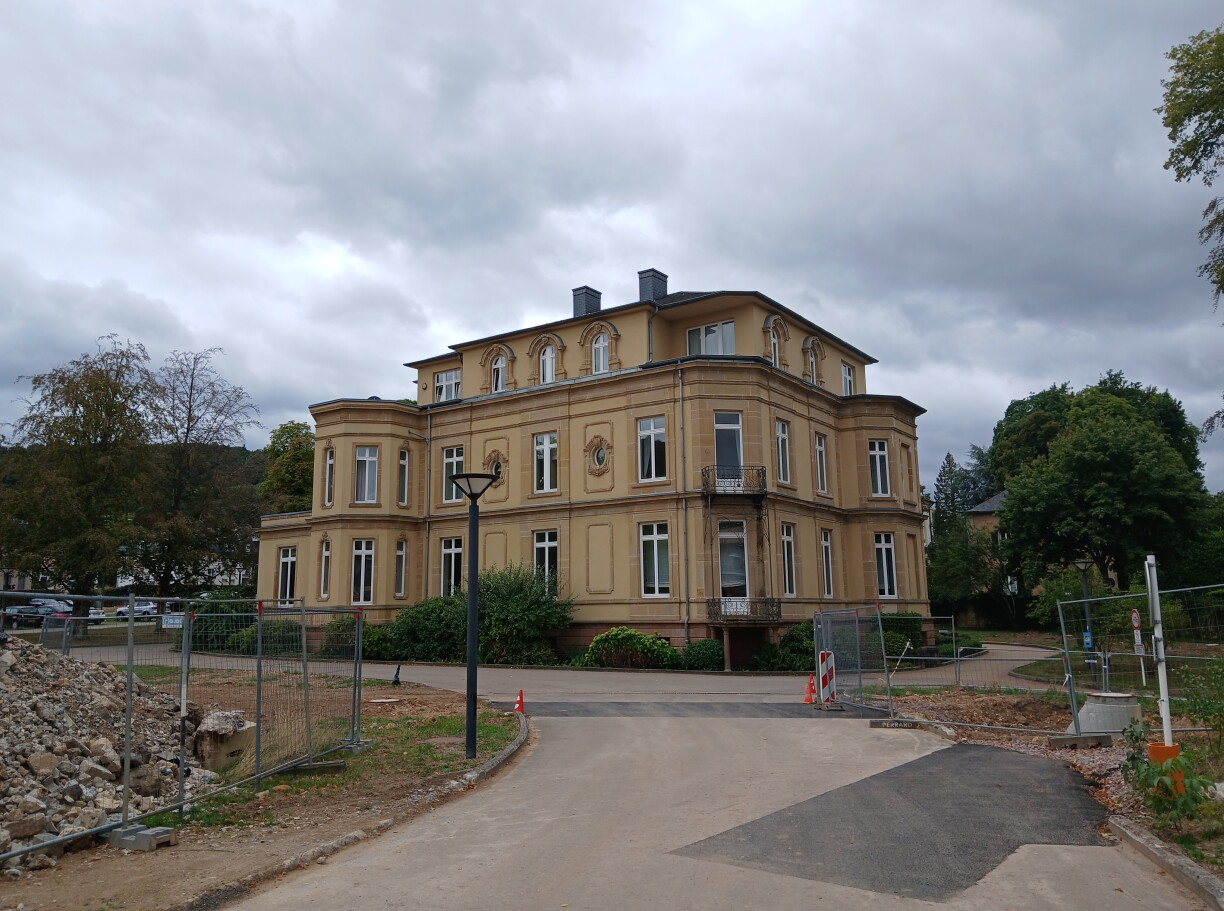
Although it sits almost directly on the main road, many people may not be aware that there is a castle in Bofferdange, in the commune of Lorentzweiler. Today it forms part of a retirement home, but during the Second World War the building served a very different purpose.
At that time, small children and teenagers were housed in Bofferdange Castle, though the facility bore little resemblance to a children's home as one would understand it today.
"Lebensborn Moselland" was the name of the children's home run at Bofferdange Castle. "Born" comes from the old German word for a pit or a spring. Lebensborn e.V. was founded at the end of 1935 on the initiative of SS chief Heinrich Himmler and was integrated into the SS.
Jérôme Courtoy, historian and educator at the National Museum of Resistance in Esch-sur-Alzette, explained that the aim was to ensure that as many children as possible, classed as racially superior, could be brought into the world. Lebensborn primarily targeted pregnant women who were not in a relationship.
If a woman became pregnant while single, Courtoy said, she was subjected to a heavy stigma. The risk of social exclusion often pushed women towards abortion in order to avoid that fate, even though in the Third Reich the official ideology ran in the opposite direction, with women expected to bring as many children as possible into the world.
Women had to register, and were only admitted once a check had established that they met the specific racial criteria.


In Germany itself, there were nine maternity clinics and two children's homes, later joined by 13 more in the occupied territories. The first aim, in this second wave, was to gain control over children born from relationships between German soldiers and women in the occupied territories.
Bofferdange Castle was among the sites used. The property had previously belonged to Luxembourgish writer Marcel Noppeney, who was deported by the Nazis to Dachau concentration camp. "Lebensborn Moselland" only operated between 1943 and 1944. By 1944, around 20 children and young people were housed on the premises, divided into two groups.
There were, on the one hand, Polish children who had been deported to Luxembourg to be Germanised, Courtoy explained. From mid-1943 onwards, children from other Lebensborn homes also began arriving in Luxembourg in growing numbers. That, he said, was because they had come from cities being bombed by the Allies and were being moved to safety.
The facility was run by three to four nuns, under the supervision of an SS Untersturmführer. Much of the work in the house and garden was carried out by concentration camp prisoners. Of particular note was the involvement of two women and two men who were Jehovah's Witnesses. In the second half of 1944, however, Bofferdange Castle was abandoned once again.
At the end of August or beginning of September 1944, Courtoy said, the Lebensborn home was cleared and evacuated in the face of the advancing Allies. The children were sent to Ansbach and to another home called Heim Franken, from where they were then distributed to further children's homes, he explained. After that, Courtoy added, their fate is essentially unknown.
Much of what took place inside the Boufferdange Lebensborn on a day-to-day basis remains unknown. There are only accounts from eyewitnesses who saw young people taking part in physical exercises.
Written records also show that the mothers of children brought to Luxembourg from other Lebensborn homes were allowed to visit them, though whether they in fact did is not known, according to Courtoy. Mothers of children who had not been deported were generally allowed to remain in contact with them. If they chose not to, the children were usually shuffled from one home to another or between foster families.
Courtoy underlined that Lebensborn was not, in any sense, a social institution. It was, above all, the exploitation of women who suffered under difficult circumstances. Children with a disability or an illness, or who did not meet the SS's racial criteria, were killed as part of the Nazi child euthanasia programme.





