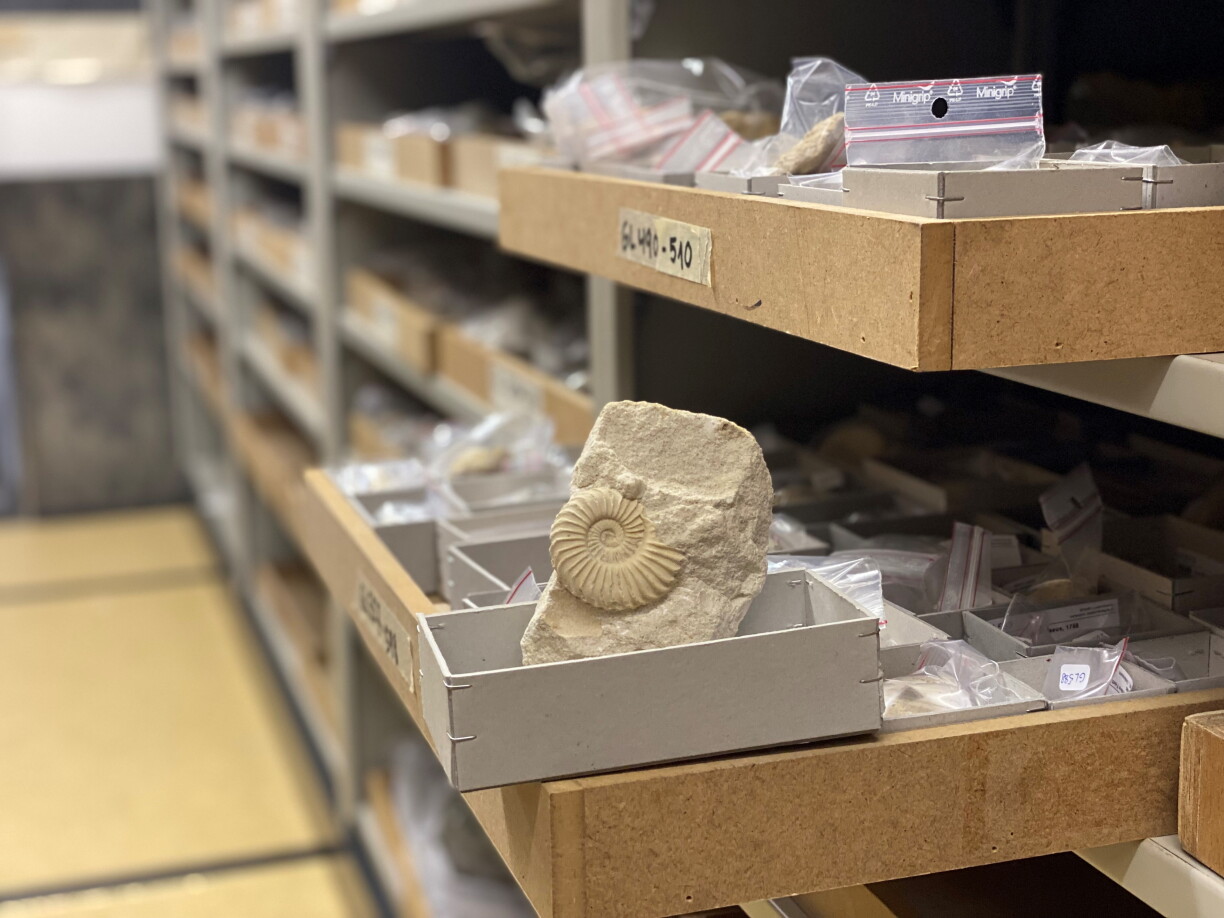
The fossil collection of the National Museum of Natural History contains 75,000 specimens, but only a few dozen are on display to the public. Ben Thuy, the museum's palaeontologist, opened the doors to the extraordinary collection preserved in Luxembourg.
Thuy's passion for fossils began as a child, when he saw the film Jurassic Park; he decided then and there that he would become a palaeontologist. His father supported and encouraged him by taking him to quarries so that he could find his first fossils.
Those discoveries only confirmed his vocation. In Rumelange, he found a sea urchin fossil that intrigued him so much that he later specialised in brittle stars, animals closely related to starfish.
Thuy went on to study and complete a doctorate in palaeontology at the University of Göttingen in Germany. For the past 11 years, he has been a palaeontologist at Luxembourg's Natural History Museum and curator of the museum's remarkable collection. In other words, he is the man who makes fossils speak in Luxembourg.
With the museum being Luxembourg's and neighbouring regions' main fossil archive, boasting a collection of 75,000 specimens representing more than 4,000 different species, he has plenty to keep him busy.
Thuy knows the storage areas where these treasures are kept like the back of his hand. He gave RTL a behind-the-scenes look at the museum: a hidden but invaluable collection.
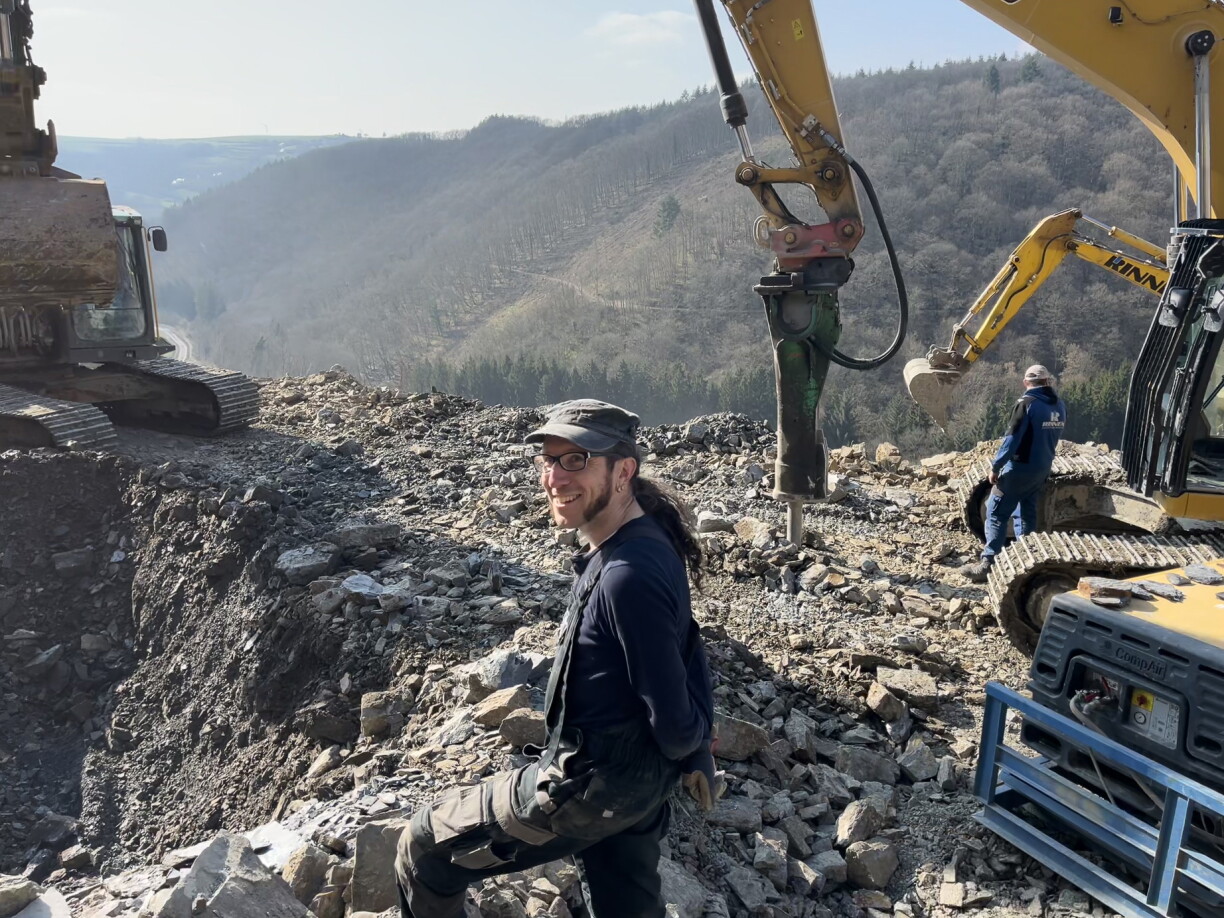
In one of the storage areas located just opposite Luxembourg's Natural History Museum, Thuy showed us some of the major discoveries made in the country.
Surrounded by carefully labelled boxes, he described the room as the museum's "Ali Baba’s cave", an archive of life containing more than 30,000 fossils, most of which will never be shown to the public, according to Thuy.
Some of these fossils are an invaluable scientific resource. Many are not spectacular enough to be included in the permanent exhibition, but their contribution to understanding past life is essential.
The palaeontologist cited the example of a tiny insect wing discovered in Bascharage. To the untrained eye, it is barely more than a small grey mark on a stone. Yet for scientists, it is an important discovery: the holotype, or reference specimen, for a completely new species.
This type of discovery is never presented to the public, but it is crucial for science. Among the pieces he is particularly fond of, Thuy showed us the fossil of a 183-million-year-old vampire squid, Simoniteuthis michaelyi, also unearthed in Bascharage.
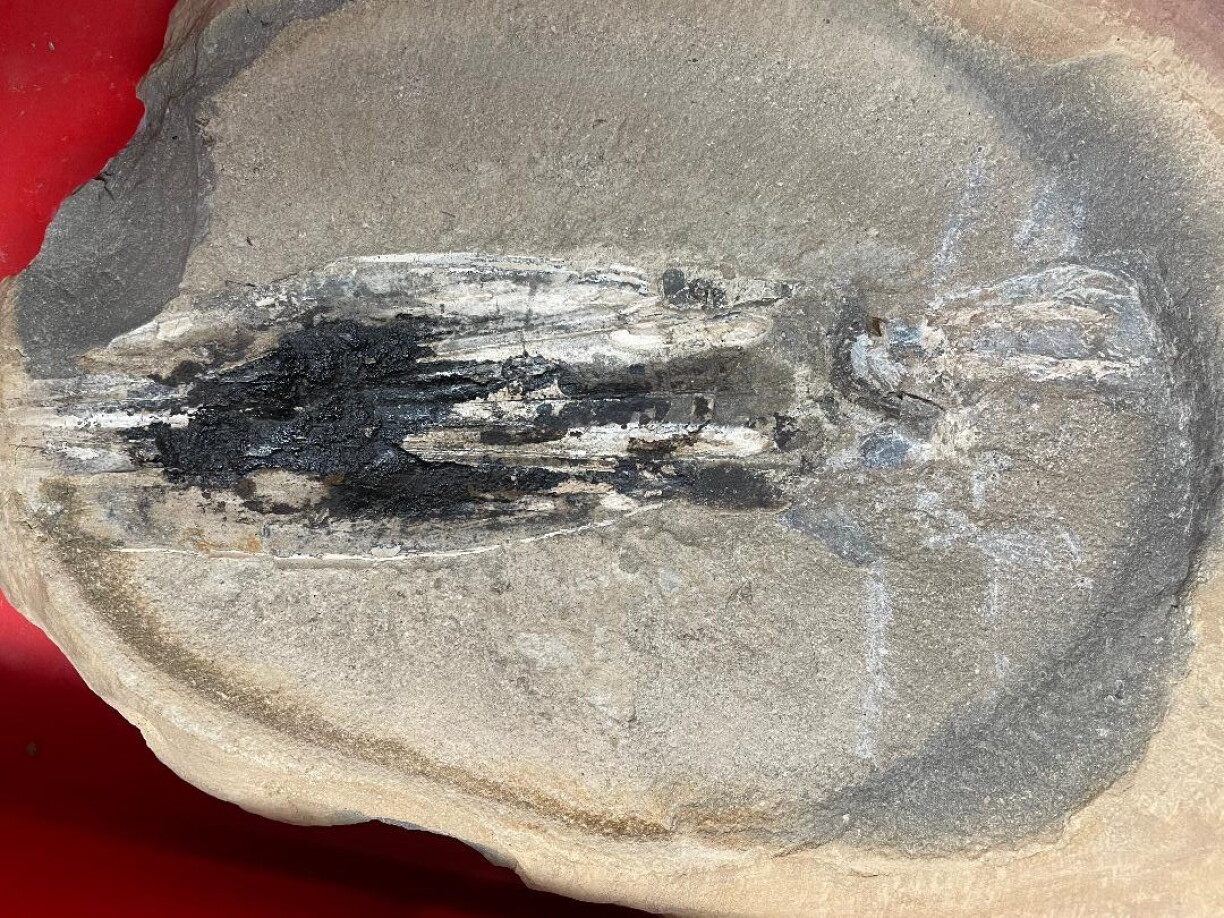
Thuy was involved in the discovery and description of this unique fossil, which has been preserved in its entirety. Thuy explained that the fossil shows fossilised ink, the arms, both eyes, and even two small fish, which have been interpreted as the animal's final meal, frozen in time.
The fossil is exceptional in several ways: it preserves most of the soft parts, which can be recognised in petrified form, and it represents a previously unknown taxon, meaning a new genus and species.
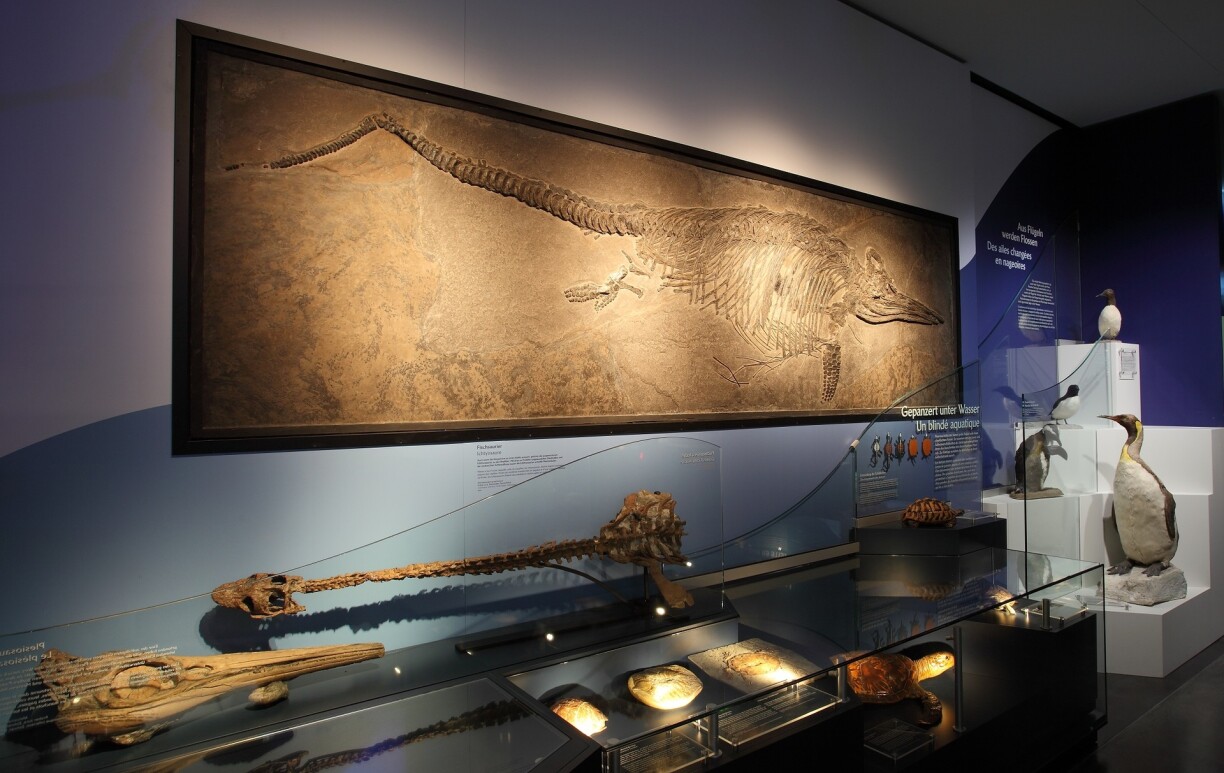
Some Luxembourg fossils are known from only a single specimen. These include the holotype of the vampire squid, as well as that of the plesiosaur Microcleidus melusinae, whose global reference is based on a single Luxembourg specimen.
That fossil is part of the museum's permanent exhibition.
According to Thuy, Luxembourg has an extraordinary fossil wealth, both in terms of abundance and diversity. The country's geological history explains this variety.
During the age of the dinosaurs, Luxembourg was always somewhere between land and sea, Thuy explained. He said that in the upper part of the Triassic period, when the first dinosaurs appeared, Luxembourg was a terrestrial region far from the sea.
Thuy explained further that at the beginning of the Jurassic period, a marine transgression saw the sea invade the land, adding that the country was covered by a shallow, fairly warm sea full of highly diverse life during the Jurassic. After this period, Luxembourg remained permanently above sea level, he said.
Several remarkable discoveries attest to this richness, including a giant sea scorpion, which Thuy helped discover, and and the world's largest fossil nautilid, unearthed in Rumelange.


Despite this abundance, traces of actual dinosaurs remain rare in Luxembourg.
So far, two fragments of a theropod, a predator, have been found in the sandstone layers of Brouch, near Mersch, according to Thuy. He added that a second dinosaur fossil corresponds to an osteoderm, a bony plate from a Scelidosaurus, a cousin of the stegosaurus, found in a limestone quarry in Rumelange.
For Thuy, making a fossil speak first means freeing it from the rock around it. A fossil is evidence of the past, a treasure trove of information, and making it speak means removing it from its rocky tomb and preparing it, he explained.
His personal preference is for microfossils: remains barely larger than grains of sand, which he studies using highly advanced microscopes. Thuy repeatedly stressed that, behind the museum's display cases and within its collections, thousands of silent witnesses to the past are waiting, each detail capable of advancing science.





