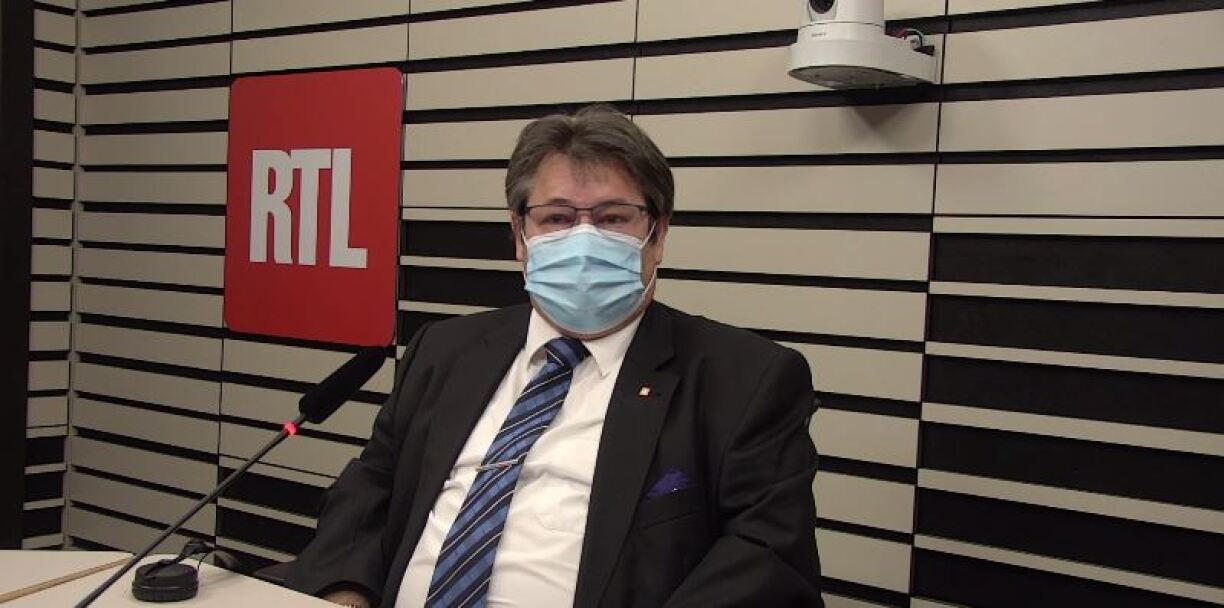
Frontline witnesses to the deaths of clusters in care and retirement homes, but also to the deep sorrow of families in quarantine who were unable to attend the funeral of a loved one during the first wave: Undertakers have experienced a real upheaval in their work since the pandemic broke out.
"The danger comes from the body fluids of the dead because they contain the virus," explained Thierry Graul, president of the Federation of Undertakers, who was a guest on RTL Radio on Wednesday morning. From the outset, the hundred or so undertakers employed by the 25 companies in the sector were able to protect themselves from Covid-19 by putting on protective suits and masks, which they had access to thanks to their assimilation to the health sector professions by the Health Inspectorate.
But today, as the 4th vaccination phase begins in Luxembourg, the undertakers' president "did not really understand" the government's decision not to prioritise the vaccination of undertakers. Especially in view of the real risk to which funeral service employees continue to be exposed.
When the workers intervene in retirement homes, "a maximum number of precautions are taken to protect them even if we are told that the patient did not die of Covid-19", explained Graul. In practice, they "go straight to people's rooms" to pick up a body because "most retirement homes do not have a morgue".
Only three structures place the dead into coffins themselves, but Graul stated that undertakers are noticing a "certain carelessness due to fatigue". In his opinion, it is slowly becoming "a bit dangerous".
The undertakers are potentially exposed to the risk of contagion on a regular basis, if only because families visit them almost daily and they sometimes come across people on the floors of retirement homes, who then start talking to them.
"We don't want to deprive anyone (of vaccines) but we are sitting in the same boat as ambulance drivers who have daily contact with patients", Graul explained. Undertakers also worried about their families and relatives, who could potentially be at risk.
Graul clarified that while the undertakers "do not feel forgotten" by the government, they simply do not understand why they are not vaccinated as a priority.
The biggest difficulty with Covid-19 is that undertakers cannot offer the services that they normally offer. It is for instance simply too dangerous to wash and dress a passed away Covid-19 patient, according to Graul.
Contrary to the rumours that circulate here and there, Covid-19 victims are not always cremated. Graul specified that only the Ebola virus legally required bodies to be cremated. In all other cases people are free to choose what they wish for the deceased, Graul stressed.
Graul also confirmed that more than a year after the beginning of the pandemic, it still happens that Covid-19 patients have to die alone and that families are not allowed to enter the structure for the last farewell. In the event of a cluster, nursing homes have no choice but to close their doors to the public. "Some homes call the families and allow them to come in when the patient is dying", however, this only happens "when death is very close", Graul stated.
The pandemic also has a financial impact on undertakers due to the need to purchase protective equipment to protect themselves against the virus. Undertakers are equipping themselves at their own expense and "prices have gone through the roof".





