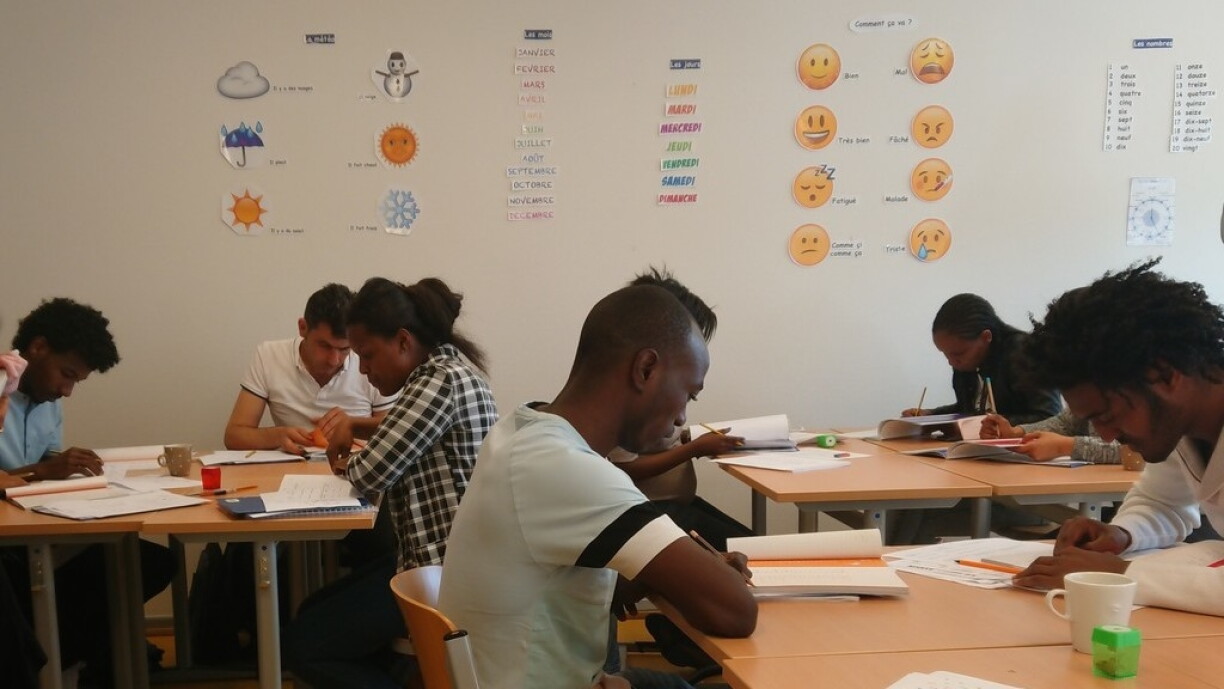
The dictionary was presented by ASTI on Thursday morning, but is already in use in the classes provided by the association.
Tigrigna is a language spoken in Eritrea and Ethiopia in particular. Among the 800 or so asylum seekers arriving in Luxembourg between January and April, 273 originated from Eritrea.
This is not the first dictionary created by ASTI, explained president Laura Zuccoli. The first dictionary was Luxembourgish - French - Arabic, said Zuccoli. Now they have Farsi, as spoken in Iran and Afghanistan. The new dictionary is the third, released after it was discovered that around 40% of applicants for international protection came from Eritrea.
The translations, including verbs and conjugations, and a brief chapter containing information about Luxembourg, cover around 130 pages.
As Tigrigna is very distinctive and different from Luxembourgish and French, and has no alphabet at the bottom, it is only possible to translate using the French alphabet. There are also multiple versions of written Tigrigna, which did not simplify matters, said co-author André Soares. They worked with a number of local people and refugees, with three people undertaking the translations, who also experienced difficulties when translating into classic Tigrigna.
Zuccoli said finding the three collaborators was a feat in itself. There were no people in Luxembourg sufficiently educated to put together the dictionary, so ASTI had to search abroad, especially for editors.
The alphabet itself required specialised computer programmes, which complicated matters, but Zuccoli underlined her pride at completing the dictionary despite the setbacks.
The dictionary is already in use in classes provided by ASTI, where students are principally taught French. But the dictionary is also meant to help in everyday situations, said Minister for Education Claude Meisch. He explained the dictionary will play an important role in encouraging integration.
He was pleased to see the dictionary in use and not just in classes. Following a discussion with some students, Meisch said students were taking the dictionary home and using it for assistance in the supermarket, or on the street, to help with French or Luxembourgish expressions.
The dictionary comprises translations of around 1,600 words. If your interest has been piqued by Tigrigna and you'd like to see a sample, there is a PDF available for download on the Ministry of Education website.