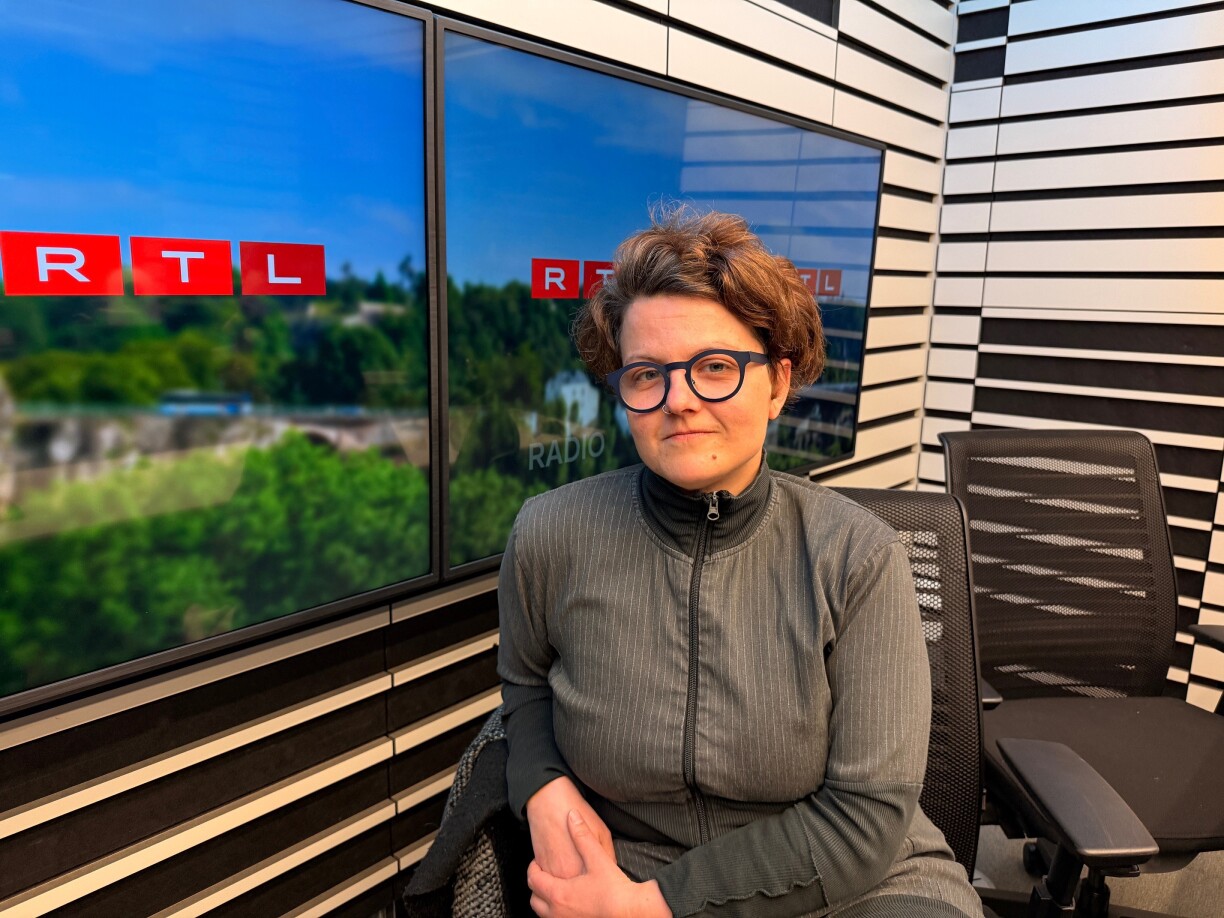
In conversation with RTL Radio Lëtzebuerg, historian Anne Schaaf reflected on the life and legacy of pioneering gynaecologist Marie-Paule Molitor-Peffer and her role in advancing sex education in Luxembourg. Schaaf is due to give a conference on Wednesday evening at the Luxembourg City Museum as part of an exhibition on menstruation.
Schaaf explained that, to put it bluntly, Molitor-Peffer "did not hold back at the time". She broke taboos and, through her educational radio programme on RTL Radio, informed the public about sexuality in all its forms. Schaaf said that Molitor-Peffer believed people should be given information, not treated as ignorant, and should be supported in developing their independence and understanding.
Molitor-Peffer's programmes, produced while she was working for the association Planning Familial Luxembourg, ran for five to six years. Listeners could send in letters with questions or call in to discuss topics live on air.
Schaaf explained that the programme was made possible by a 1978 law addressing pregnancy and ways to prevent abortion and unwanted pregnancies. This led to a decision to better inform the public, even if the term 'sex education' was not yet commonly used. The law referred to "sexual information", which subsequently became mandatory in schools.
Schaaf noted that Molitor-Peffer challenged social norms, arguing that people should not be prevented from understanding their own bodies. She maintained that sexuality exists from birth, evolving in different ways over time. Schaaf explained further that Molitor-Peffer insisted older people also have a sexuality, which may differ from that of teenagers but is equally valid, and that issues such as menopause should be openly addressed.
She added that Molitor-Peffer also advocated for people with disabilities to be able to live out their sexuality and argued that homosexual people are part of society and should not be judged, which Schaaf described as highly progressive for the time.
Molitor-Peffer placed great importance on vocabulary, according to Schaaf. She explained that Molitor-Peffer encouraged people to think about how to express such topics in Luxembourgish, noting that many terms for genitalia carried negative connotations.
Schaaf stressed that Molitor-Peffer described the body as a work of art and encouraged people to view it positively. Molitor-Peffer promoted not only scientifically accurate terminology but also more affectionate language, stressing that genitalia are not something shameful, Schaaf said. She also noted that Molitor-Peffer was a strong advocate of masturbation.
Schaaf explained that Molitor-Peffer did not only receive support: she even received death threats by phone. Despite this, Schaaf said she continued to speak openly.
Initially, the radio programme on RTL had been organised jointly by Planning Familial and the Action familiale et populaire, but Schaaf described how this led to serious conflicts, sometimes even on air, due to fundamentally opposing views. She added that Molitor-Peffer frequently criticised the role of Catholicism, arguing that it caused considerable harm.
Schaaf placed this in a broader historical context, noting that religion had a strong influence in Luxembourg at the time and that political and social debates were closely intertwined.
She pointed out that Luxembourg's first government without the Christian Social People's Party (CSV) since the Second World War had only been formed in 1974, adding that Molitor-Peffer embodied many of these societal tensions. Molitor-Peffer approached sexuality as a topic that went far beyond biology classes, according to Schaaf.
Reflecting on current debates around gender-neutral toilets, Schaaf speculated that Molitor-Peffer might have reacted critically, but would likely have challenged politicians with strong arguments. She emphasised that Molitor-Peffer would have prioritised listening to those directly concerned, noting that too often adults debate such issues without speaking to the people affected.
Molitor-Peffer would have encouraged asking non-binary young people directly whether they need such facilities and why, according to Schaaf.
The conference scheduled for Wednesday evening is already fully booked, although Schaaf indicated that she would be available to organise additional talks.





