
However, one subject seems to be bothering the population: the freedom to choose one's vaccine, according to a TNS Ilres poll conducted for RTL.
Being isolated from loved ones, teleworking, being deprived of restaurants, culture, or a simple walk in the forest, and above all living with the threat of contamination, or mourning the loss of a loved one taken by the virus...
For just over a year now, Luxembourg has been experiencing an unprecedented health crisis.
Since 29 February 2020 (the date of the first known infection with the coronavirus), residents have been living with the daily threat of infection, while undergoing isolation and health restrictions that would have seemed unimaginable just a few years ago.
And yet, despite all these hardships, what characterises the people of the Grand Duchy is… their calm and confidence.
This is the rather impressive result of the survey "State of mind of the resident population", carried out by TNS* for RTL and the Luxemburger Wort.
Obviously, all is not rosy, and impatience and fatigue are very much in evidence.
But compared to the social discontent raging in the Grand Duchy's neighbouring countries, the small island of Luxembourg seems to be weathering the storm more valiantly.
The majority of residents are therefore rather satisfied with the decisions taken by the government since the beginning of the crisis and trust it to get the country out of this crisis. Some figures illustrate this trend:
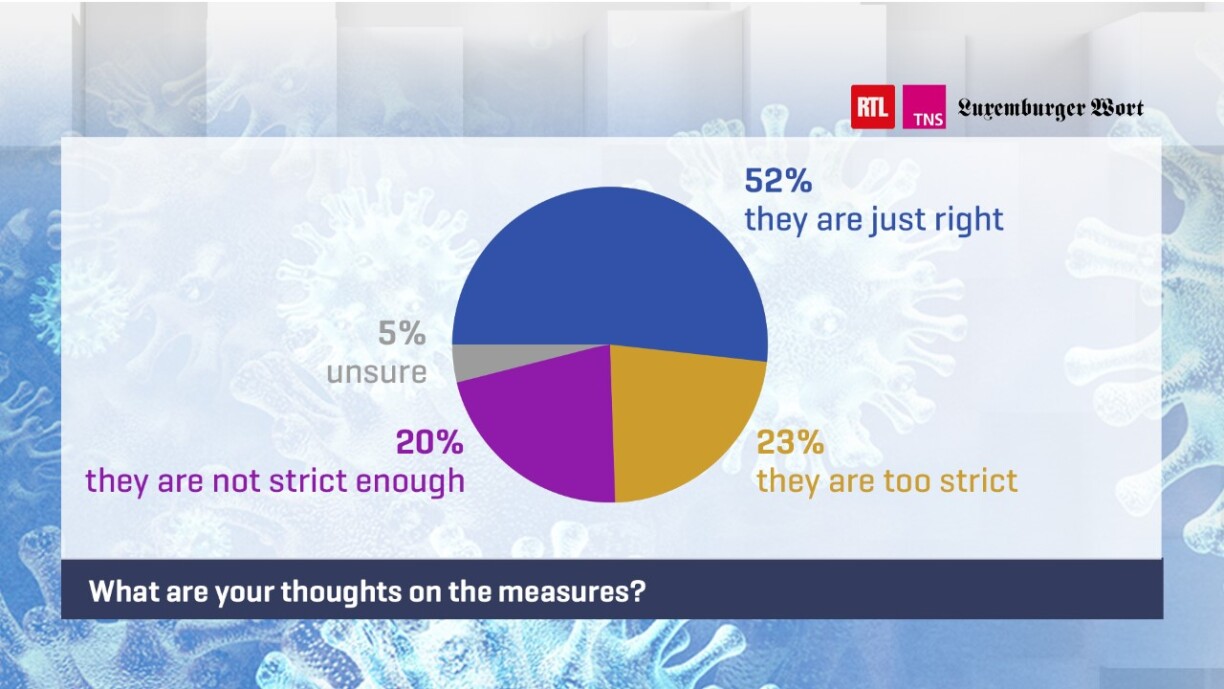
Let's focus on this last point, because indeed some measures are more or less tolerated.
Overall, the main measures are accepted by the population, whether it is the obligation to wear a mask in public transport and shops (93% acceptance) or in schools (75%), the ban on gatherings of more than 100 people (83%), the large-scale testing campaign (76%)…
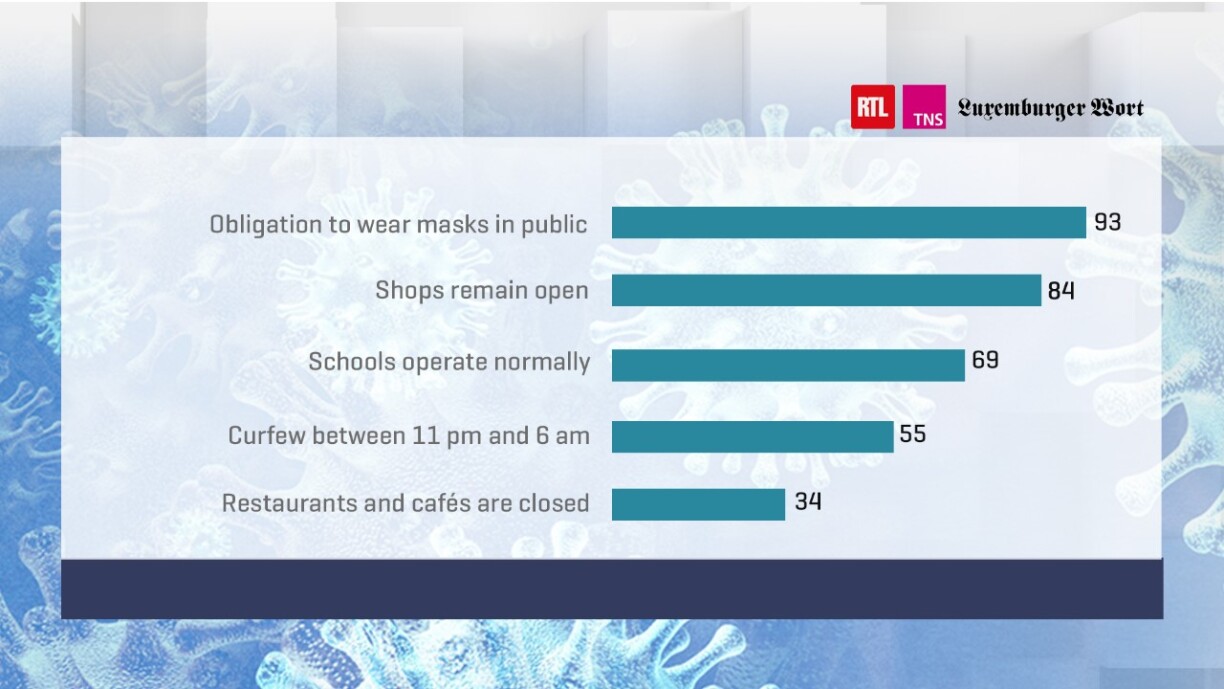
However, it should be noted that two measures are especially unpopular with the Grand Duchy's residents: the 11 pm to 6 am curfew is approved by only 55% of the population, and above all the closing of restaurants and pubs is approved by only 34% of those polled.
This will reassure the representatives of the Horesca sector who have been campaigning since the beginning for a relaxation of the measures in the sector.
There remains the central issue of vaccination. On this point, some of the answers are sure to leave the authorities in a cold sweat.
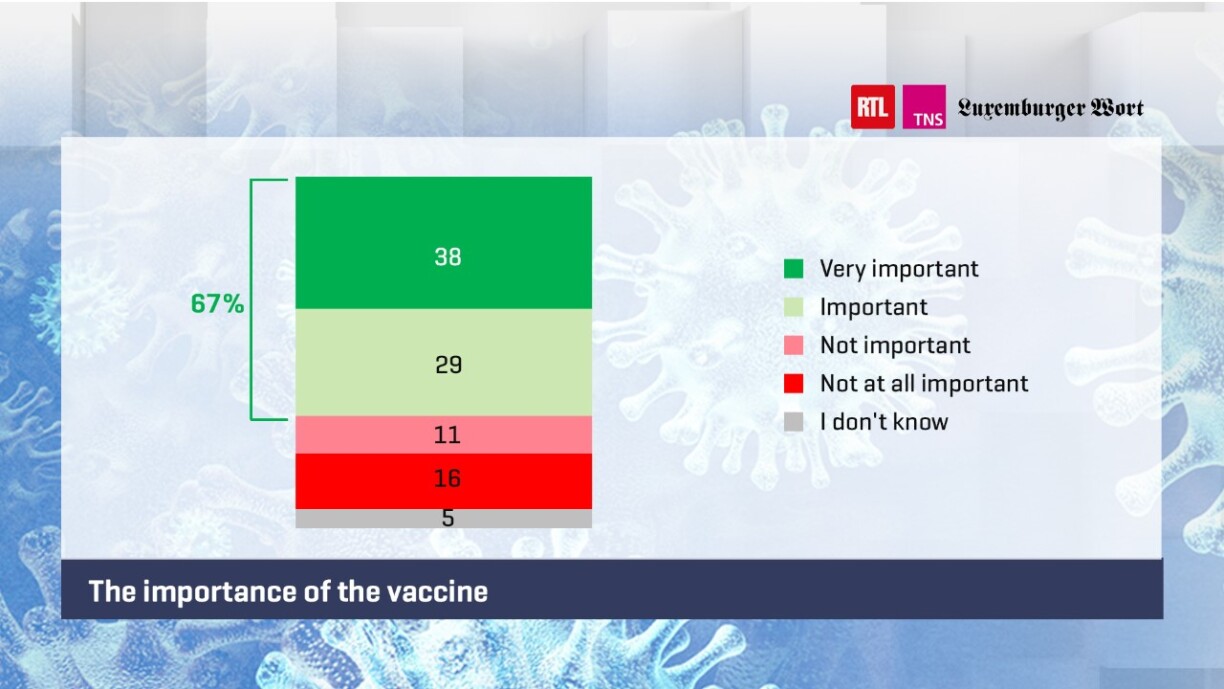
"When I am invited by the government to be vaccinated against Covid-19, I will be vaccinated": 66% of those polled answered that they totally or somewhat agreed with this statement.
This is a majority, but still leaves a large proportion of those undecided (10%) or opposed to the statement (19%).
It should also be noted that men (71%) are more in favour of vaccination than women (59%), and that older people (55 years and over) are more in favour than younger people.
And an issue is emerging: more and more residents would like to have a say in their vaccination. 63% of respondents say that "people should be able to choose their vaccine".
Unfortunately, the survey does not specify which vaccines are favoured by respondents, but it is likely that the recent setbacks with the AstraZeneca vaccine play a role, as do concerns about the arrival of Russian and Chinese vaccines.
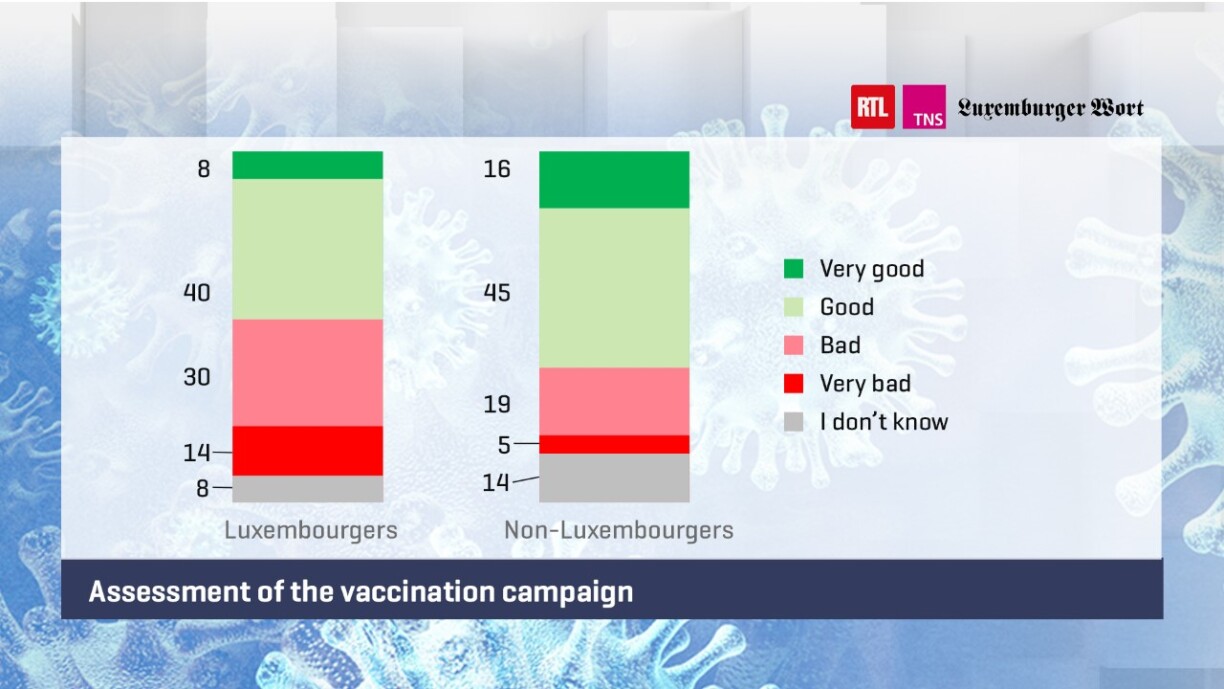
Few residents therefore have blind faith in vaccination. The confidence of the respondents in the government is also eroded when it comes to vaccination (54% consider that the government has done a good job in this area).
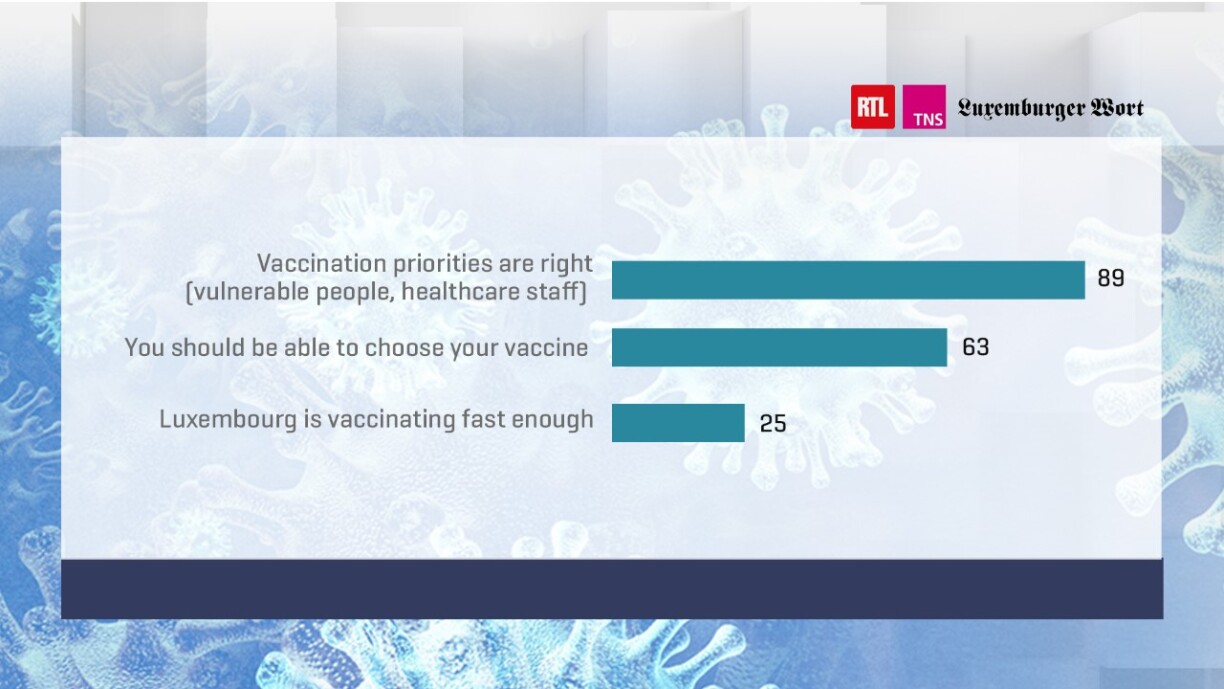
3/4 of those polled think that the vaccination campaign is moving ahead too slowly.
This mistrust, or even rejection of the vaccination campaign by part of the population, is undoubtedly a challenge for the authorities, who are counting on the widest possible vaccination to bring the country out of the crisis.
Over 3/4 of participants stated that the pandemic is taking a toll on their mental health. Especially young people are becoming increasingly tired and impatient.
However, in general, people appear to be keeping their cool - or at least, as much as possible given the circumstances.
*Survey conducted among a representative sample of 516 residents in Luxembourg. Details of the method and the questionnaire can be found on Alia.lu.





