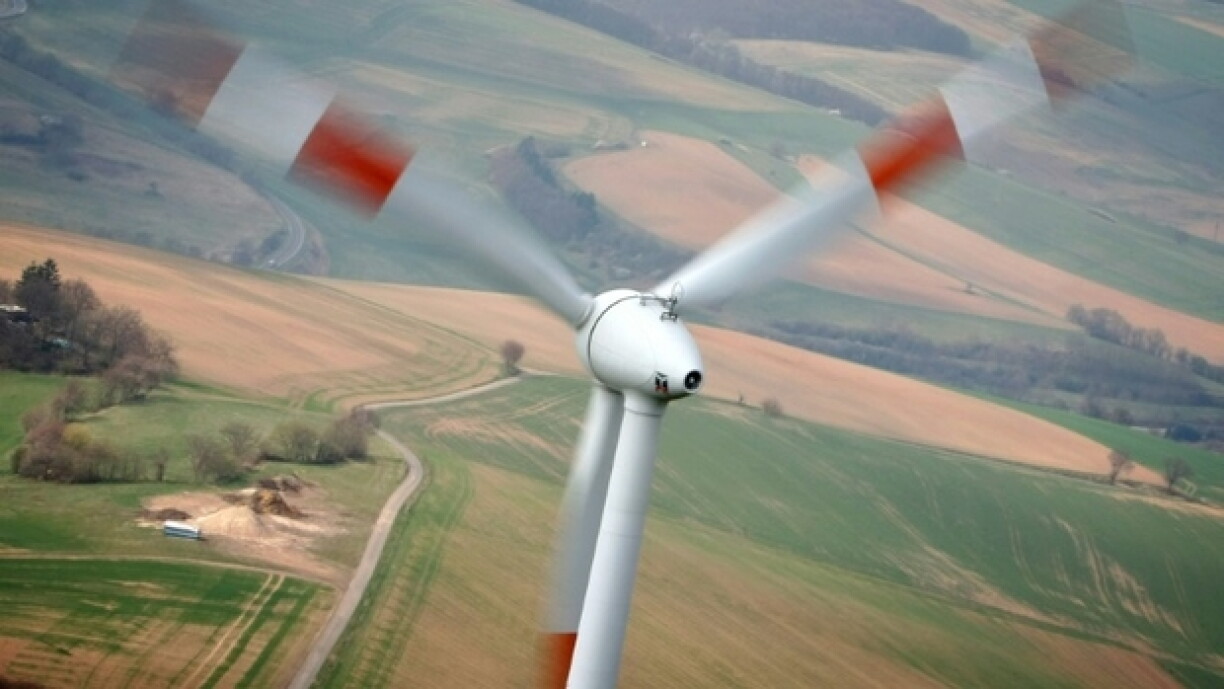
It is not possible to set up a land register for windmills - that's the stance taken by Minister for the Environment Carole Dieschbourg and Minister for Energy Claude Turmes in their response to a parliamentary question by CSV MPs Martine Hansen and Gilles Roth. They were wondering about windmills after Claude Turmes had talked about the technical possibilities of big windmills in the written press. One of the questions asked was whether there were plans to create a land register for windmills.
The ministers in charge said no and explained that such a plan was impossible to put into action, as there are too many different sets of data needed for each windmill location, including wind conditions, distance to buildings and protected animal species.
The ministers detailed that the percentage of renewable energy should increase massively by 2030, when it should reach 23 to 25%. They are looking to achieve this through a number of measures, including photovoltaic systems and windmills. They currently produce around 235 gigawatt hours - a standard that was reached in 2017. Next year, the theoretically possible production should be 239 gigawatt hours per year. And in ten years' time it should be 676.
Where can windmills be placed? What are the conditions? Ministers Dieschbourg and Turmes said that it depends on the location. For example, areas frequented by red kites require a monitoring plan prior to authorisation. Under that plan, people observe the behaviour of the animal. A further condition is that the wind turbine is switched off during the day when work is carried out on the ground, for example for mowing the grass or when harvesting crops. Under those conditions, windmills are not allowed to run for five days.
At the end of May, a red kite was found dead by a windmill in Weiler in the municipality of Wincrange and the wind park was halted. In the meantime, part of the park is back in operation, said Wincrange representatives.





