Today, it is clear that the choice enabled the country to overcome a severe opioid crisis. But why did Portugal follow this path, and what lessons could Luxembourg take from it?
As a result of the 40-year dictatorship of António de Oliveira Salazar, illegal drugs arrived in Portugal much later than in other countries and encountered a population that knew nothing about drugs, explained João Goulão, director of the Anti-Drug Coordination Service in Portugal. It started with cannabis imported by those who returned to the country after decolonisation, but the inhibition threshold for other substances was very low.
"Heroine became very popular and spread very violently. In just a matter of 10, 15 years, we had a huge number of users, and it was almost impossible to find a Portuguese family that had no problems related to this," Goulão stated.
In 1998, 1% of the Portuguese population had a problematic drug use, almost all of them with heroin. 56% of HIV infections were due to intravenous injections. 650 people died of an overdose. It was at this point that the government decided to look for another strategy," according to Goulão, who worked on the project at the time.
The director of Portugal's Anti-Drug Coordination Service recalls that the only limitation that they received from the government at the time was that they could propose whatever they wanted, as long as it did not violate the treaties of the United Nations. "And so," Goulão explained, "we found this way, because the treaties do not specify that drugs should be criminalised."
However, drugs are still prohibited in Portugal. If a user is caught by the police, they will not be criminally prosecuted. Instead, they will have to report to a special "deterrence committee" within a few days. They may be liable to administrative sanctions if they do not comply. The committee offers psycho-social follow-up and therapy According to Goulão, the team is able to persuade 80% of people in the end. Looking back over the past two decades, it can be observed that the number of persons with problematic drug use has decreased to 0.33% of the population, heroin is considerably less prevalent, and the number of HIV infections via injection and overdoses has decreased dramatically.
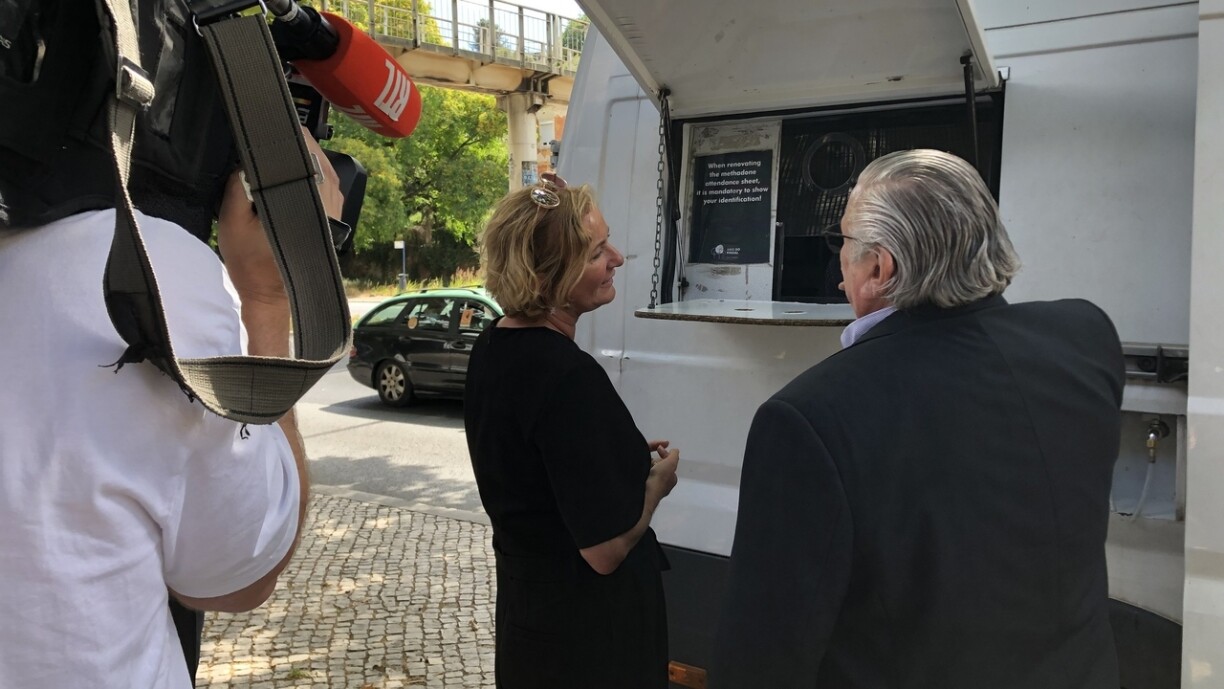
Luxembourg's Minister of Health, Paulette Lenert, who is currently visiting Portugal, said she is considering taking inspiration from Portugal's model of decriminalisation.
"It's about considering the person as a patient, as a sick person, and making them an offer, providing care, and social supervision, and I think that this logic should apply to all drugs," Lenert stated.
The Minister added that she hopes that this issue will be addressed in Luxembourg.